From: Jared B
In this article, I plan to show how someone unfamiliar with the following systems may build a basic “Tank-like” character. The gaming systems I will be using for this example are D&D 5e, Pathfinder 2e, Palladium High Fantasy, Mongoose 2e Traveller, and Iron Kingdoms(Full Metal Fantasy).
The points we are looking for in a tank generally are: overall tough (they can be considered hard to hit and/or have high health), and can aggro (deliberately provoke) the enemy to keep the damage off their friends. I am going to keep it fairly simple and not delve into the Meta that is possible in any given system or go much further than what would be available, ability-wise, beyond levels 1 through 3 of a given system.
D&D
D&D uses a class-based system so we will focus there first. These classes also help guide your decisions for Attribute placement as each has a recommended “high stat” that makes the class function the way it is supposed to.

Class-wise, it’s recommended you pick one of the typical “Martial” classes. These boast the best armor proficiencies/defensive skills and can have the best Armor Class (AC), therefore making it harder to get hit, regardless of how high your HP is.
The Martial classes are the following: Barbarian, Fighter, Monk, Paladin, Ranger, and Rogue. Some of these focus on damage over defense, which will be covered in a separate article. For this focus, we are going to look at the Barbarian, Fighter, and Paladin. An atypical “Martial” Class is the Cleric, because, despite its primary function as a healer, this class’s access to heavier armor and the ability to heal makes it able to tank more hits than a normal fighter.
The Recommended Stats for the above classes are as follows:
Barbarian: Strength (Constitution is a close second as it is the basis of the Barbarian’s Class-specific AC)
Fighter: Strength or Dexterity
Paladin: Strength & Charisma (Cha is for spell casting)
Cleric: Wisdom (For spell casting)
In addition to picking a class that has access to medium to heavy armor, or equivalent, i.e., Barbarian’s unarmored Defense, it is ideal if you go with a more medium armor selection to have at least a +2 Dex modifier (This would be a 14-15 in the attribute).
Race-wise you should probably pick a Race that has a bonus in the Stats that support the class you have chosen. Dwarves have +2 Con, Dwarf (Mountain) has a +2 Strength, Half-Orc has +2 Str and +1 Con, and a racial ability to not get knocked out of the fight the first time they get reduced to 0 HP.
In the ‘tough’ department, you need to focus on your Constitution (CON) Stat. This adds a bonus amount to your health (HP) in this system. For the Barbarian this also raises their AC in addition to increasing their available HP. This is regardless of the class you choose. Note: There are Feats and Items that you can add to your character to improve all of the above but for this article, I’m sticking to the basics of what you have at levels 1 through 3.
To recap, to play the “Tank” in D&D you should pick a class from Barbarian, Fighter, Paladin, or even Cleric. Depending on the flavor you want in your tank character. You should focus on raising your Armor Class (AC) as high as possible, to start with but also throughout the gameplay. This can be done with Equipment or Stats. Secondly, get your Health Points (HP) as high as you can to begin with and other ways to raise it through raising Constitution (CON) and other items and feats that may be available to you.
Pathfinder 2e
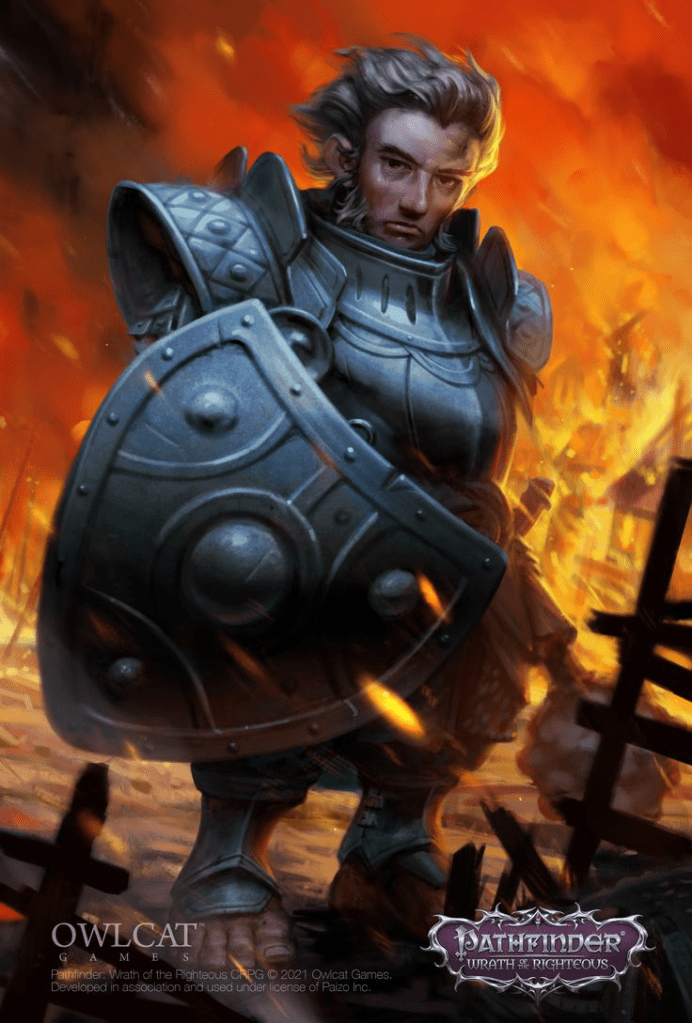
Not much different than D&D is Pathfinder 2e. Their Races are called “Heritages”. Your Heritage determines your starting HP, so this is very important. Backgrounds actually give you stat boosts, so these come into play for a build like this.
Class-wise, Barbarian, Fighter, and Ranger still are a good fit for this Tank Archetype. No Cleric this time, because they don’t have the armor proficiencies.
For Heritages, you’ll want to pick Dwarf, and almost any of “Bloodlines” will work for making a tough character. A second choice, and a surprise to me, is Goblin, but in this case, you need to pick either the Charhide or Unbreakable Bloodlines. The Charhide is very situational as it only really helps you with fire-based damage, whereas the Unbreakable Bloodline raises your HP to 10 from 6 at level 1. So in the HP department, this is a good choice. Dwarves come with a default 10 HP.
The background I recommend is the Warrior as it gives you STR and/or CON boost and a good skill (Intimdate), to deal with troublesome opponents.
Palladium High Fantasy
Moving on to Palladium. Palladium is largely a skill-based system, not combat-based, but building a ‘Tank’ is still pretty straightforward. Attributes are more numerous in this system but you’ll want to focus on Physical Strength(PS), Physical Endurance(PE), and Physical Prowess(PP) as they help you to handle heavier armor, be tougher, and parry and dodge better, respectively.
Classes are called Occupation Character Classes (OCC). The ideal choices for this build would be their Men-At-Arms Category of OCC’s. Under that, the choices are Mercenary Warrior, Soldier, Knight, and Paladin. All of these are primarily chosen because they have access to the right fighting skills and heavier sets of starting armor. Their skills vary a bit so you may want to go into a deep-dive into those options before you choose which to go with, but that is a good starting list.
Race-wise, the system breaks into two groups. One is Humans and Their Allies, and the other is the Monster Races. For this build, you are probably going to want to look at Dwarf again, which falls under “Humans and Allies”. They have above-average PS and PE, and average PP. Under the Monster Races, you have more options. Orcs, Ogres, or Trolls are the best options for the three stats we have mentioned. Out of those three, the Trolls have the strongest across all three but, as with all of the monster races, they are limited by what OCC’s they can be. It works for this build, because Mercenary Warrior and Soldier seem to be a catch-all with most Races.
Traveller: Mongoose 2e
Traveller is a little odd in this list as it doesn’t really have a “Class” or “Backgrounds” to choose from. Rather we have to focus on the “Career” options that are given as part of character creation.
Starting with Attributes, in Traveller your physical attributes are your HP, so you need all those to be as high as you can when you roll or assign attributes. Endurance is especially important as it helps you recover and is often the first attribute to take a hit.
Career-wise you will probably want to go Army or Marines. They both require an Endurance (END) roll to enter the Career. Marines focus on END to survive in the assignments (read subclass) of the career whereas Army varies depending on the Assignment between the three physical stats. Both have a good chance of getting Armor and an opportunity to boost END in their Benefits Tables.
That is pretty much it in Traveller. Traveller is not really a combat-based system so a Tank build is a bit out of the norm for the system.
Iron Kingdoms: Full Metal Fantasy
In Iron Kingdoms the Attribute system is, once again, the character’s HP, but it is also set up in a two-tier system. First, we have the Primary Stats, Physique, Agility, and Intellect. Secondary Stats are like substats to the Primaries. Under Physique is Speed and Strength. Under Agility is Poise and Prowess. Under Intellect is Arcane and Perception.
The ones we are going to focus on are determined by the Defense ‘Stat’ and Armor ‘Stat’. Defense (DEF) is the sum of Speed, Agility, and Perception. This determines how hard it is to hit the character. Armor is the Physique Stat plus whatever armor the character is wearing.
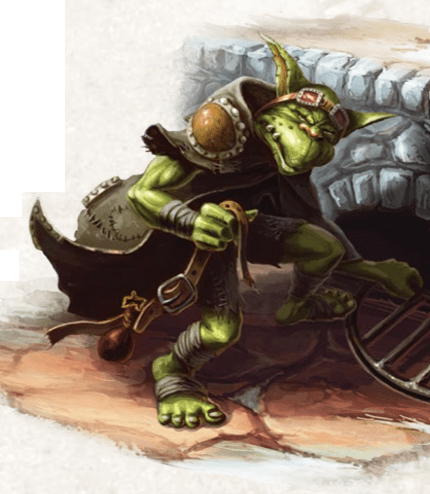
Based on this, the Race with the Highest Physique is Ogrun (6) or Trollkin (6). However, the highest DEF is the Gobber (14), who also has the lowest Physique (4). Our second best DEF (13) that also has a decent Physique (5) is Nyss. Human remains a decent choice with a starting Physique of 5, a moderate DEF of 12, and a racial ability to raise either one of those by 1 at the beginning of the game. There are also three points you can distribute as you wish on the attributes, but you are limited by racial caps as well.
Next, you must pick your Archetype from Gifted, Intellectual, Mighty, and Skilled. For obvious reasons, Mighty is what we are looking for in a Tank. It gives you some neat abilities that either help keep the character from going down or help them pop back up if they do.
For Classes (Careers) you pick two. The simplest way to choose, if a Tank is your goal, is to pair Arcane Mechanik with either Knight or Man-At-Arms. The Arcane Mechanik gets you a nice piece of Armor and the Knight or Man-At-Arms gives you some good defensive skills. Keep in mind, that the Knight career is restricted to the Human race.
The rest comes in what equipment you buy, although I don’t think you can do much better than the Arcane armor in the beginning.
This isn’t a comprehensive cover of the choices within these systems in building a Tank, nor is it a definitive how-to guide, but it is a good place to start and see what works best for you and your game. I hope this helps those trying out new systems to see how they can build a ‘Tank’ if they find themselves starting a game in any of the above systems. If you have any tips, feel free to drop them in the comments or on the Discord channel.
Game On!
About the Author
Jared “Martel” B has been GMing and playing in several TTRPG’s since late 2013. Enjoys the challenge of bringing his players worlds and stories straight from his mind in the moment that it happens. He is one of the Founders of RPGCounterpoint, happy husband to an active historian wife, and father to two puppers and new baby!
 RPG Counterpoint
Leave a comment