By: Jared Biti
In this article, I thought I’d share how I, as a GM, plan and develop my homebrew campaigns. Upfront, as of this article, I have not run any published campaigns in my 10 years as a GM. There have been about 3 full campaigns, a lot of one-shots, and a few mini-campaigns sprinkled in there, but by and large, I follow a simple formula in my head, regardless of theme or party makeup. This article will use the example of the first online game I ran at length. The system was D&D 5e and the party started at level 1. The campaign fizzled at about level 12 and was intended to end around level 13-15.
So at level 1, I had to get the group all in the same area. There were 2 Drow, but that was easy enough, an Eladrin elf, and a Dwarf. Hmm, this was going to be interesting.
Normally I would simply try to land all the party at the same locale by happenstance. Say a Tavern, the same open-air market, or more pointedly an adventurer’s guild. That would be difficult with this party. So what to do?
Well, I put the Drow on a “coming of age” quest to find some crystals in a cave and put the Eladrin in the same cave network looking for her own quest MacGuffin. The Dwarf came a little later so I’ll get to his story in a moment. So, the three elves end up in the same cave and are lured through a portal mirror thing… by some event. I honestly do not remember what it was, but it forced the three of them together and through the portal. I put the Dwarf in a different cave, mining or tunneling with a few of his kin. Their network started collapsing, trapping them, and closing in on them. They ran and ended up in a dead-end tunnel. There, they saw a shimmering portal, and, wanting to live, they jumped through it. Only the player character appeared on the other side.
My normal plan of action at this point, having gotten the party together in one area or on one quest, is to feel the party out; get a feel for the morals, what drives these characters, and how they work together as a group. Getting to know each other and revealing their character’s attitudes through their actions and interactions was my goal. I normally accomplish this through seemingly random encounters and interactions. Throw some bandits in there, and some goblins in here.
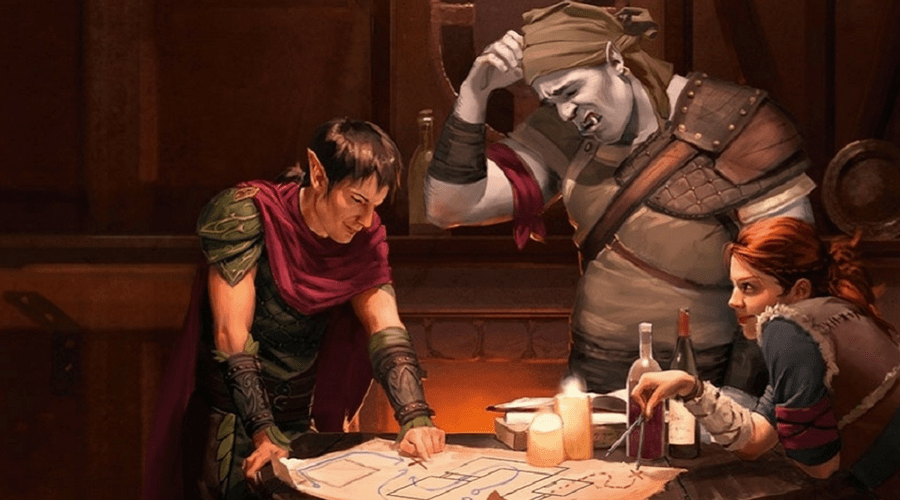
In this case, I dropped them in the backdoor of a penial colony in revolt. Would they help the prisoners in their revolt or would they betray them to the attacking army? They sided with the prisoners, and did a lot of damage to the attacking army, in part by detonating a large store of gunpowder underground… nearly collapsing part of the mine they were in. But it worked, in the sense that it bought the defenders a lot more time and hampered the attacking army’s efforts. So much so, that they hired a team of crack mercenaries to take out the PC party. Through this, I believe they were able to work their way up to level 3 or 4. The mercenaries were virtually an “evil twin” of the party, using similar tactics and builds. The battle went pretty much as expected and the party was captured. Dropped from an airship to their certain death, they are washed ashore, if you could call it that, in a digital world, el Tron. There, I plied their backstories and brought in important characters from their past. Including, featuring one character’s long-dead mentor, making the party think that people had to die in other worlds to end up in this one, only to show another character’s father. Who, last they knew, was not dead. Again, testing their reactions, but now starting to pull on the heartstrings. Showing their character’s feelings and real allegiances. They end up fighting a virus entity in this setting. They were chased out of the setting, with the father character sacrificing himself to let them escape. This setting lasted a level or two. At this point, they are around level 5-6.
At this point in my formula, I have used “random” encounters, for the party to advance from level 1 to level 5, to show me what direction the party flows in. Now I try to start pulling from all the past, seemingly random, encounters and backgrounds of the player characters to visualize how the ‘endgame’ will look for the campaign.
In this case, I had them land in yet another world, they encounter characters that have a child’s bedtime storytelling of heroes that match the party’s description, sans a few specific details. A mechanical arm here, an all-seeing eye there, etc. They also have an encounter with a being, an “Over God” if you will, that explains that he needs their help defeating his polar opposite. This other entity is also building a team of “Heralds” that the party must defeat to get to the “Evil God”. In the setting they are in, they encounter 2 of these “Heralds.”
So, in the process of figuring out the “endgame” of the campaign, I try to come up with “minibosses”. Beings that are often “Lieutenants” or similar high-level minions for the actual BBEG (Big Bad Evil Guy) of the campaign. They do not have to exist but it gives you tools for major encounters throughout the campaign.
The goal for this particular campaign was for them to fight these “Heralds” one at a time, and then as they defeat them they learn more about the BBEG. The final boss fight was to be the BBEG with these “Heralds” resurrected from their defeat by the party to aid their boss in the final showdown.
So to summarize: My formula for campaigns that have no starting structure is to start everyone at level 1. Then, between levels 1 and about 5, I throw setting-accurate random encounters to see how they react and how the party works together towards surviving and overcoming the encounters. I do use XP, divided amongst the participating party members to facilitate their leveling up. Once I can see how the party functions as a group and their backgrounds have kinda fleshed themselves out through the party interacting and getting to know one another, I develop a loose idea of what I want the end of the campaign to be, boss fights, etc. And l look at the accumulation of encounters up to this point to help flesh out enemies, allies, and paths that lead to that final encounter. Using all that, I start placing breadcrumbs and planting information and encounters that will lead the party toward my envisioned ending.
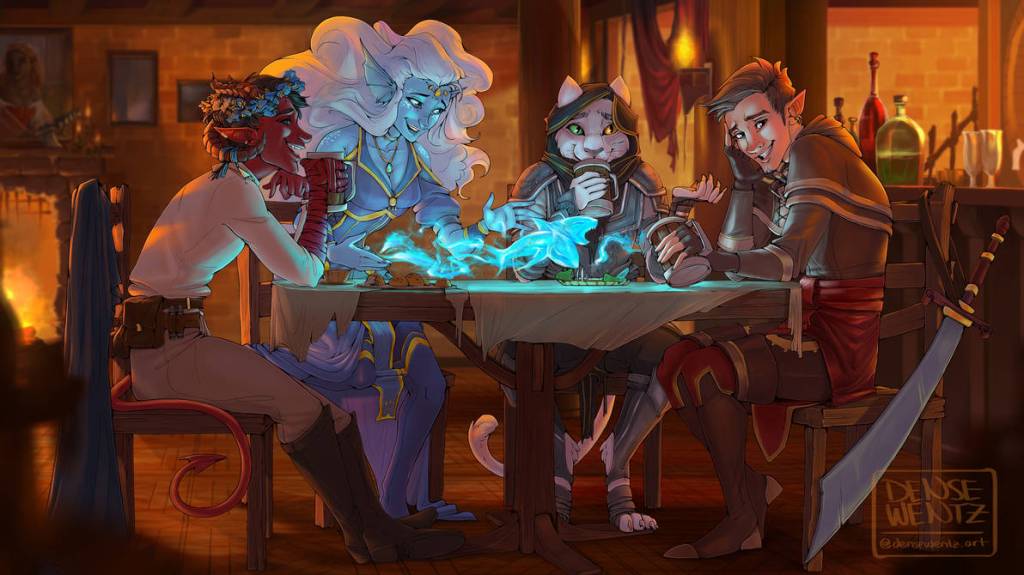
Of course, you always have to be prepared for the party to do whatever they will do, but for the most part, it has worked in my experience as a GM/DM. Thank you for following me through all this and I hope this is helpful for new and experienced GM/DM’s looking to better the experiences at their game tables. Game on!
About the Author
Jared “Martel” B has been GMing and playing in several TTRPG’s since late 2013. Enjoys the challenge of bringing his players worlds and stories straight from his mind in the moment that it happens. He is one of the Founders of RPGCounterpoint, happy husband to an active historian wife, and father to two puppers and toddler!
 RPG Counterpoint
Leave a comment