Written by: John Henry (Hammered Out Homebrew)
Tabletop role-playing games (TTRPGs) are a mixture of storytelling, strategic planning, and social interaction. Among the many elements that make these games captivating, social encounters stand out as pivotal moments that can shape the narrative and deepen player engagement. Whether you’re a seasoned game master(GM), or a newcomer to the world of TTRPGs, understanding how to approach social encounters can significantly enhance the gaming experience. This article will explore strategies for creating and navigating social interactions in TTRPGs, ensuring they are dynamic, engaging, and meaningful. This will primarily assist GMs but will only help any player that reads it.
Understanding Social Encounters
Social encounters in TTRPGs are interactions between player characters (PCs) and non-player characters (NPCs) that involve dialogue, negotiation, persuasion, and sometimes deception. These encounters can range from casual conversations to intense diplomatic negotiations or clandestine espionage. Unlike combat encounters, which often have clear rules and objectives, social encounters are more fluid and open-ended, relying heavily on role-playing and narrative development. They allow players to impact the story without hitting someone with a hammer and truly embody the emotions their character might be feeling.
Preparation and World-Building
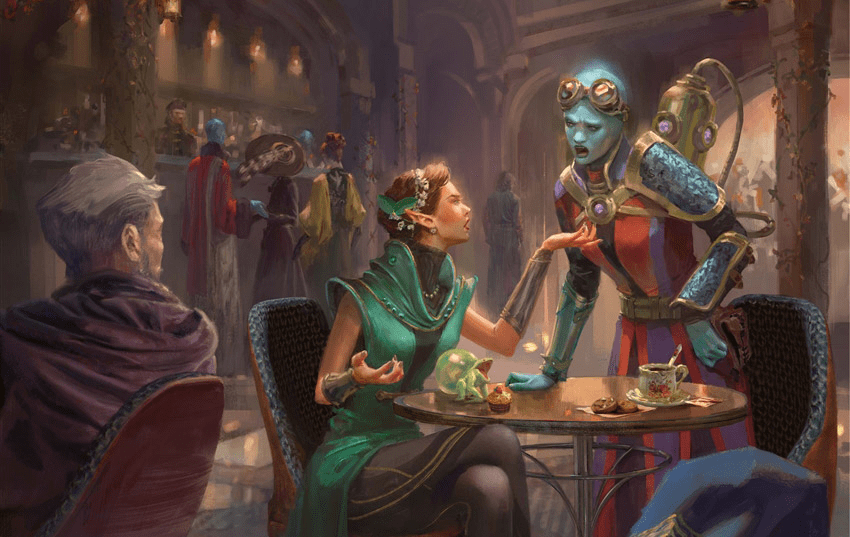
Although a silly conversation with a goblin that you will never meet again does not need a lot of forethought, many social encounters impact the narrative going forward. It is important to put care into social encounters, because they will have weight in the game overall. You never know when some slip of the tongue becomes canon information for the rest of the game! The things listed here are important to consider for encounters that will impact the narrative going forward.
- Character Development: Before diving into a social encounter, it’s essential to flesh out your NPCs. Understand their motivations, fears, desires, and backgrounds. A well-developed NPC will respond more naturally to the PCs and make the interaction feel authentic. Consider their voice, mannerisms, and personality traits. Are they friendly and approachable, or aloof and secretive?
- Setting the Scene: The environment where the social encounter takes place can greatly influence its tone. Describe the setting, including sights, sounds, and smells. A negotiation in a dimly lit tavern will feel very different from one in a royal courtroom. The setting can also provide context clues and add layers to the interaction.
- Plot Hooks: Social encounters should tie into the larger narrative. Use them to introduce new plot points, provide critical information, or create moral dilemmas. A well-placed social encounter can propel the story forward and give players a sense of purpose.
Engaging the Players
- Encourage Role-Playing: Foster an environment where players feel comfortable stepping into their characters’ shoes. Encourage them to use their characters’ voices, mannerisms, and thought processes. It’s fine to poke fun as a friend, but be aware of going too far in a way that may discourage the player’s investment into these type of things. You are all there to have fun. It’s okay if it’s a little silly. As a GM, reward creative role-playing with inspiration points, advantages, or narrative rewards.
- Active Listening: Pay attention to what the players are saying and how they’re saying it. Active listening allows you to respond appropriately and keep the conversation flowing naturally. Acknowledge their inputs and build on them to create a dynamic interaction. This can also tell you what is sticking out to your players. If describing one detail about how an NPC reacts sticks out to your players, be wary of using it unless you want them to grab onto that detail.
- Open-Ended Questions: Ask questions that require more than a yes or no answer. This encourages players to think deeply about their responses and engage more fully with the encounter. Questions like “How do you feel about this proposal?” or “What are your thoughts on the king’s decree?” prompt richer dialogue.
Mechanics and Gameplay
- Skill Checks: Integrate skill checks to add an element of chance and strategy to social encounters. Skills like Persuasion, Deception, Insight, and Intimidation can be pivotal. However, don’t let the dice dictate the entire interaction. Use skill checks to guide the conversation rather than determine its outcome entirely. The starting attitude of the NPC toward the PC should determine the difficulty of the check. If the NPC is already favorable toward the PC, a check could go as low as 5
- Consequences and Rewards: Social encounters should have tangible outcomes that affect the game world. Successes and failures should lead to meaningful consequences, whether it’s gaining an ally, acquiring critical information, gaining new missions, or facing new obstacles. Ensure that players understand that their choices and actions have weight.
- Pacing and Balance: Maintain a balance between social encounters and other aspects of the game, such as combat and exploration. Too many social encounters can slow the game’s pace, while too few can make the world feel shallow. Strive for a mix that keeps the narrative engaging and varied. Of course, if the game you are playing or your players (and yourself) prefer one or the other, it is perfectly fine to prioritize that aspect.
Common Challenges and Solutions
- Player Reluctance: Some players might be shy or unsure about role-playing. Encourage them gently and provide positive reinforcement when they do engage. Pairing them with more experienced role-players can also help them ease into it. Also, do not talk down to the player if they choose to go about their roleplay in a different manner. Some people get into the headspace of their character better if they describe it from a 3rd person point of view, and that is fine.
- Overpowering NPCs: Avoid making NPCs too dominant in social encounters. They should facilitate the story, not overshadow the players. Ensure that NPCs provide hooks and opportunities for the PCs to take center stage. NPCs in positions of power should not roll over for the PCs but they are still not the stars of the show.
- Metagaming: Players may sometimes use out-of-character knowledge to influence their actions. Address this by gently reminding them to stay in character and by creating situations where metagaming is less effective, such as NPCs with hidden motives or complex backgrounds. A certain degree of metagaming is fine, like being aware that since an action the character might take would dampen the fun for the other players, you should be hesitant to take it, even if it might be what your character might do.
Advanced Techniques
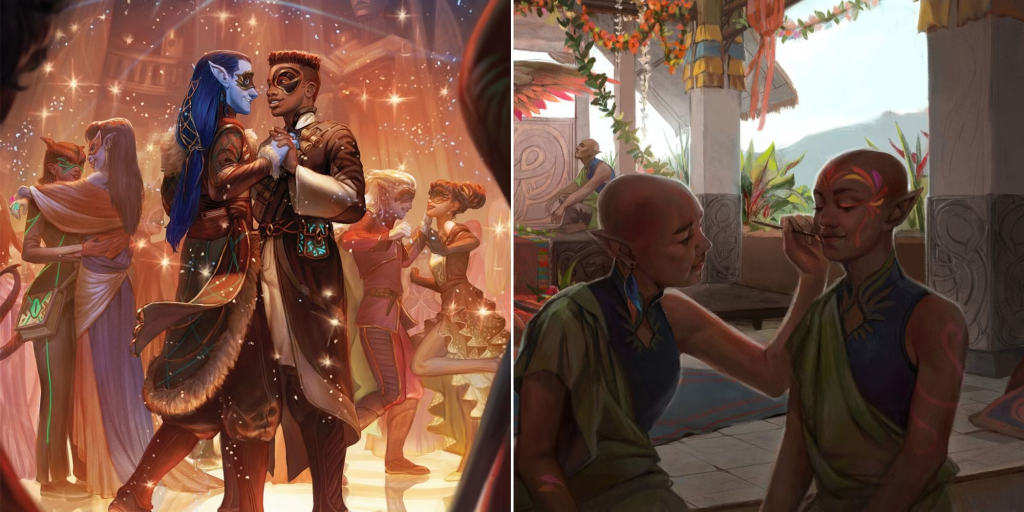
- Dynamic NPCs: Create NPCs with evolving motivations and relationships. As the story progresses, let NPCs change based on the PCs’ actions and the unfolding narrative. This adds depth and makes the world feel more alive. This can be even more effective if their motives and actions are changing based on what the players are doing. If your players let a wealthy inventor know about the looming threat of demons, they may take it upon themselves to go about arming the populace unbidden.
- Moral Ambiguity: Introduce morally gray areas where there are no clear right or wrong answers. These situations can lead to rich, nuanced role-playing as players grapple with difficult choices and their consequences. This can lead to more complications if you and your players really just want a simple story so just be aware of what everyone is shooting for.
- Inter-Character Conflict: Encourage healthy conflict between player characters. Differing opinions and goals can lead to compelling social encounters and character development. Ensure that this remains constructive and doesn’t disrupt group cohesion. If things get heated, take a break and ask the players to directly talk to each other instead of through the characters. This lets the players view things from an outside perspective that can let them assure each other nothing is personal.
Conclusion
Social encounters are a cornerstone of TTRPGs, offering opportunities for deep role-playing, narrative development, and player engagement. By preparing thoroughly, encouraging active participation, and integrating meaningful mechanics, GMs can create memorable and impactful social interactions. Navigating these encounters effectively enriches the gaming experience, making the world feel vibrant and dynamic. Whether through intense negotiations, heartfelt conversations, or cunning deceptions, social encounters breathe life into the stories we tell around the tabletop. Embrace these moments, and watch as your game transforms into a living, breathing adventure.
About the Author
John’s TTRPG experience: He has played D&D off and on for 14ish years. Starting in 2019, he has consistently run campaigns and one shots. Starting soon after that John started publishing his homebrew to the internet. He has written enough homebrew that he has plans for a book of it to be released sometime in 2023(DrivethruRPG). He has also played Monster of the Week, many RP board games, Call of Cthulu, and Pathfinder. You can see other of his work on Instagram!
 RPG Counterpoint
Leave a comment