Written by: J.W. Grace (Argentwind)
For many people, their experience in running or playing Table-Top Role Playing Games (TTRPGs) falls primarily in one genre, usually fantasy. Changing to a different genre can really spice up your game sessions. You can either start up a whole new campaign or inject elements from a different genre into an existing game. From choosing a tailor-made system, using a generic system or simply describing the world to your players in a way that alters the genre, the choices are endless.
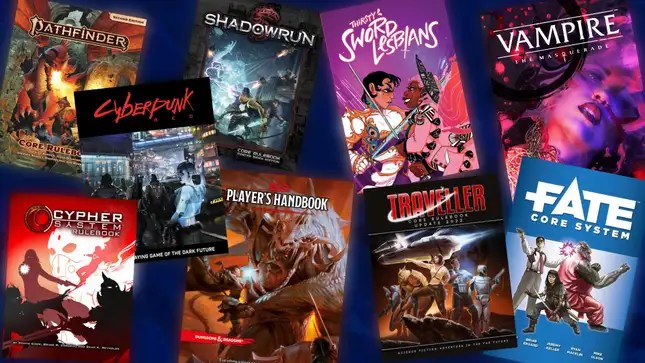
When it comes to roleplaying games, you can find a system for any genre you would like to explore. For fantasy settings, Dungeons and Dragon and Pathfinder are the most widely used. If you want to experience a horror game, Call of Cthulhu is the most widely known, but World of Darkness is also quite popular if you want to deal with vampires, werewolves, wizards, faerie creatures, or the humans that hunt them. Venturing into science fiction, Traveler is a long-time favorite for deep space exploration, but Cyberpunk also falls into that category for a dystopian future game.
Many roleplaying game systems are based on popular movies and TV shows. Star Wars, Star Trek, Firefly, Babylon 5, Buffy, and many others have their own RPGs. Almost every popular series will have dedicated systems or if they don’t, some other existing system can be used. The advantage of these games is that they bring a familiar element to players who are fans of content already which gives them access to much of the lore of the world. It also gives them insight for how to roleplay characters similar to ones they know and love. DM’s can even run games where the players can play as their favorite characters – instant buy-in!
Some game settings are designed to be a mix of genres. Shadowrun is a setting that fuses a cyberpunk future with magic and fantasy races and monsters. Deadlands is a Wild West setting featuring gunslingers and supernatural threats. Dresden Files, based on the book series by Jim Butcher, uses the FATE system in a modern setting where wizards and supernatural creatures hide among us. The Alien RPG captures the feel of that franchise with a brutal mix of science fiction and horror. You can also delve into body horror with Eclipse Phase where people implant their minds into genetically and cybernetically enhanced bodies. There’s even a mix of eldritch monstrosities, giant mechanized warriors, and secret cults in the Cthulhutech system. There are so many mixed-genre games to choose from. You can read game reviews or watch actual plays on your favorite streaming platforms to see how these systems are played. Going to game conventions and trying our new or unfamiliar settings is another great way to expand your options.
Sometimes game masters will try to force a system, like D&D, to work in a different genre but this can have mixed results with balancing power levels and game mechanics with the feel of the game you’re trying to achieve. The mechanics of the system may not lend themselves to the type of game you want to run. A horror genre for high-level DnD characters is very difficult to run because the strength and abilities of those characters are far beyond your typical ghost or ghoul. If the game is one of political and social intrigue but you throw an invading army of monsters that have to be fought in large-scale combat, the players may find themselves getting frustrated or overwhelmed. “This isn’t what I signed up for!”
Another thing to consider is that a shift in tone, genre, or theme to an established system or setting can be jarring for people who have experience with that game. If players expect to experience a sci-fi genre and the entire game takes place on one planet with low-level technology and magic, they might be disappointed or confused. While it can be refreshing to see something different, there may be players who find it to be too weird or unfamiliar. Like any game you want to run, discuss this with your players and see what they are in the mood to play. If some genre-mashing appeals to them, forge on and have fun.
If altering an established system is too daunting for you or off-putting to your players, you might consider using a generic system instead. There are many systems that can be adapted to whatever setting you desire: Hero, GURPS, Cypher, FATE, AGE and SAGAS, a new system developed by one of our fellow writers. All of these systems have rules designed for customizing a game for any genre or even a mix of genres. If you don’t want to adapt a generic system, you can often find published supplements for these systems to be used in a specific setting. Hero system has Champions with rules and guidelines for running super-hero games. AGE has Fantasy Age for running traditional sword and sorcery games. GURPS has many supplements for specific genres, periods of history or even novels, shows, or comics. Search around and see what you can find.
If you are set on adding elements of a different genre to an existing game, there are various ways to do so. In most fantasy games, you will find many elements of horror while fighting undead or demons. It’s a simple task to use creepy or monstrous descriptions for the enemies that your players encounter. In some published content, you’ll find science-fiction elements like in the 1980 D&D adventure “Expedition to the Barrier Peaks”. In this scenario, the group will discover a crashed vessel with strange technological items and weapons. You can find many third-party publishers that have content that delves into alternate genres like Steampunk. Have you ever wanted your warrior to use a laser rifle or an energy sword? Want to use robots and airships? There is published content for that!
However, inspiration can come from a variety of sources. If you don’t want to use published content, you can also simply “reskin” items or adversaries to fit into a different genre. Reskinning is taking an existing item or monster and describing it in a different way so that it fits with the theme of your game. For example, an energy sword could have the same statistics as its more traditional version but instead of doing the usual weapon damage, it would do lightning or fire damage instead. A strange-looking crossbow could fire bolts of pure force. A horrific alien monster could have identical scores and abilities of a demon or devil. Creativity goes a long way when it comes to designing the things that your players will encounter during your game.
Another advantage of reskinning is that you can take a wide variety of enemies, locations, and items and alter them to fit your chosen specific theme. If you’re trying for a more horror-based game, you can make everything dark and creepy. Adding black glistening skin and multiple eyes and tentacles to a variety of normal beasts will take a simple woodland or jungle encounter and make it much more horrific. Adding magically enchanted bullets and arcane-powered mechanical horses to a Western game turns the familiar Old West into fantasy. The possibilities are endless.
Regardless of the kind of game you want to run, there is a way to accomplish it. There are so many systems to choose from and tools you can use to create the experience that you and your players will enjoy. Have fun with your games and always remember that it’s your creativity that brings the world to life.
About the Author
Jim “Argentwind” Grace has been playing and running TTRPG’s for almost 40 years in dozens of systems from AGE to Hero and every edition of D&D along the way. He is the Tavern Owner of the Tumbled Tankard Discord server and a primary content contributor for the Tumbled Tankard YouTube channel.
 RPG Counterpoint
Leave a comment