
By: Jared B.
What is Science Fantasy? It’s when you mix science fiction and fantasy elements instead of keeping them separate. Such as magic in space, or mad scientists creating magical technology.
The flavor I was inspired by was what I read in a fiction book series. For those interested, it is the Salvage Trouble: Mission 1 of the Galaxy Outlaws series set in the Black Ocean setting. (Links at the end of the article) I then adapted that to a 5e game I was running, which took place in space. The gist of the use of magic within the book is there are engineers that keep the lights and life support going, but there are wizards that make the artificial gravity work and allow faster-than-light-travel(FTL) to occur. The drawback to magic in space is that if used at a volume that is too high around electrical equipment, it will cause the magic energy to short-circuit the electronics. It is intended as a balancing mechanic to keep magic in space from being too powerful.
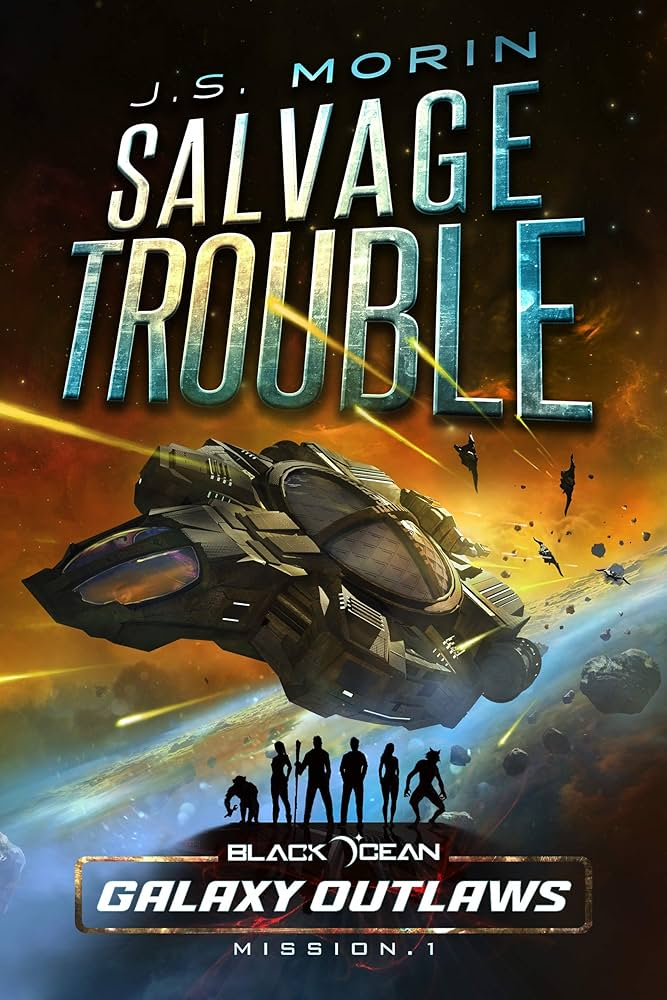
How I adapted it to a tabletop game was by allowing most classes to work as normal except for the halfcasters we had to translate the spells into “special-use limited-use skills” instead of spells and allowed the wizards and sorcerers to use their magic as normal but with a “fail table” for when they used it around electronics. I also had to create the spell used by wizards to facilitate FTL travel, work out the level scaling of it, and so on.
So first, I made the FTL spell that all wizards in this setting would have in their repertoire.
Dimension Dive, I called it. It was a level 3 spell that could be cast as a ritual assuming the glyphs had been set up in the central part of a ship. This would be standard in most ships. This, amongst other things, limited the use of the wizard class as a PC. So after I had a player make a wizard for the crew we realized the issue and he rerolled a ranger instead. Ironing out the details of this homebrew adaptation has its growing pains, as it were.
I did not get a chance to do much in the fleshing out of the gravity side of the wizard’s job but that would likely have come up if the game had run longer. In the meantime, I had to develop the previously mentioned “fail table”. It was not so much a fail table as an, “Oh you fried everything around you to an ‘X’ extent and range”. The spells would still go off as intended but would have the side effect of EMPing(electromagnetic pulse) everything around the caster and their intended target. The “save” was set up as a d20 roll with a failure on an 11 or higher.
I initially said any spell had a chance of doing this, including cantrips and “leveled” spells. I later waivered on whether cantrips would have strong enough magical energy for it to be a concern.
I worked out a formula to make the level of the spell and the damage it could inflict as modifiers on a d20 “save” that determined whether an EMP would occur and how strong it would be. The range of the EMP and the strength were directly related to the level of the spell and the damage it would normally do.
As an example, we will look at the cantrip Firebolt, the 1st level spell Burning Hands, and the 2nd level spell Scorching Ray.
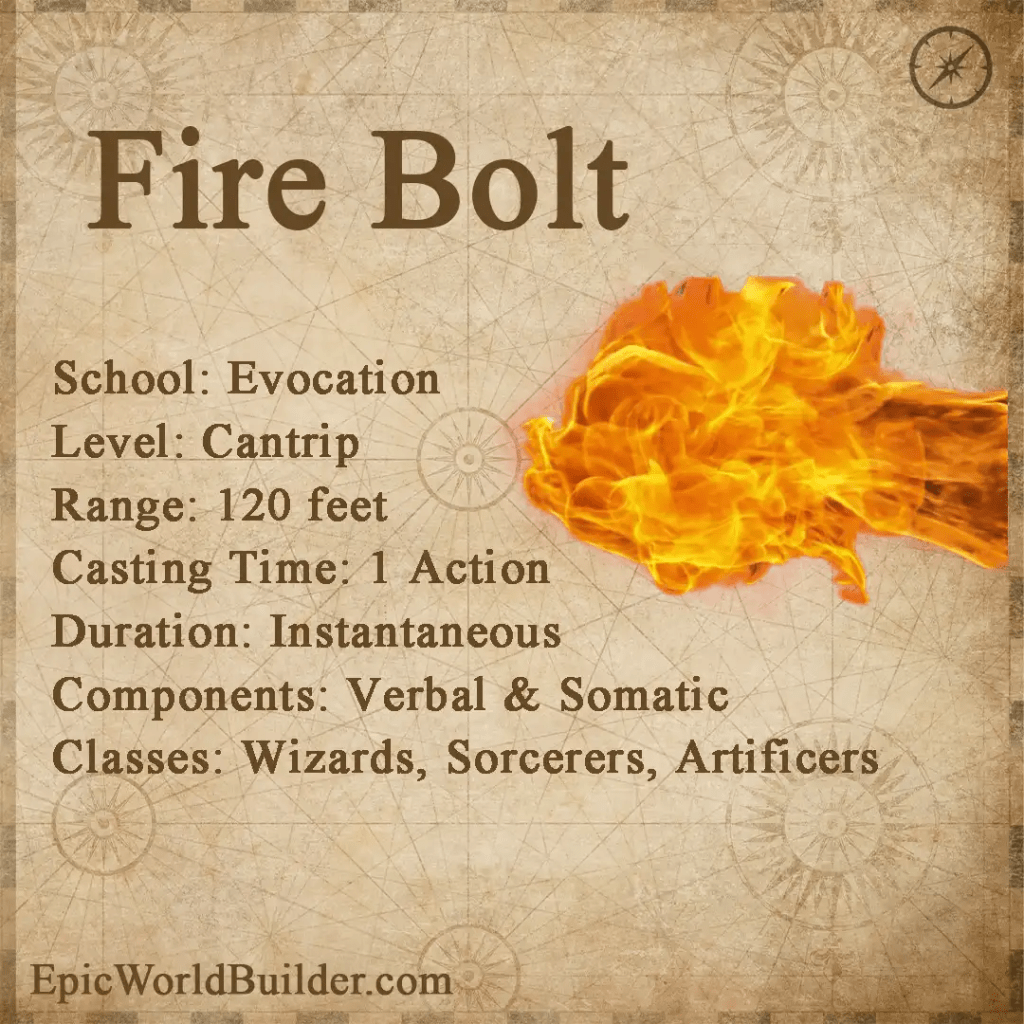
Firebolt, is a cantrip, +0 to failure, has a range of 120 feet (so the EMP can also emit from the intended target), and does 1d10 damage. This means the EMP will cause 1d10 electrical damage only to electronics. (The amount of damage needed to render an electronic device useless will have to be worked out as well. We will get to that later.) As a cantrip let us say it is an EMP range of 10 feet from the caster and the target/target area of the spell.
During Firebolt, the caster throws their spell at an enemy that is attempting to board their vessel. They hit the brigand from 30 feet away and roll 3+0 on the EMP table. No issues. They step forward as a group of enemies try to squeeze through an airlock door. The wizard puts their hands together and releases burning hands into the space.
Burning Hands. Level 1 spell(+2 to failure) with a possible EMP coming from the caster and the victims, although in this case, the victims are fairly close so the 15-foot radius (for level 1 spells) will have somewhat of a figure-8 shape. They roll on the EMP table 1+2. So again, no issues other than a scorched airlock area.
Stepping into the airlock zone the wizard fires off the three bolts of Scorching Ray into the enemies further in the attacking ship. 3 bolts means 3 EMP rolls and again the EMP can come from the wizard and the victims. We are now looking at a possible 20-foot radius of EMP. Firing off the bolts at the intended targets, 2 miss and 1 hits its target perfectly. Now the EMP rolls at +4 as this is a level 2 spell. 11+4, 13+4, 11+4. All fail so 3 EMP’s pulse out from the wizard, and 1 each from the targets of the spell or where they end up landing. For this, I would just extrapolate out where they would hit a wall or reach the spell’s range limit and use that as the focal point of the EMP. The spell does 2d6 per bolt so 2d6 electrical damage pulses out 20 feet from each of the 3 impact points and 6d6 from the wizard.
Let us talk about the electronic damage capacity. For this, I am going to reference the “Statistics for Objects” in 5e. The size of the electronic will not really be a factor so we are looking at just “Resilience.”
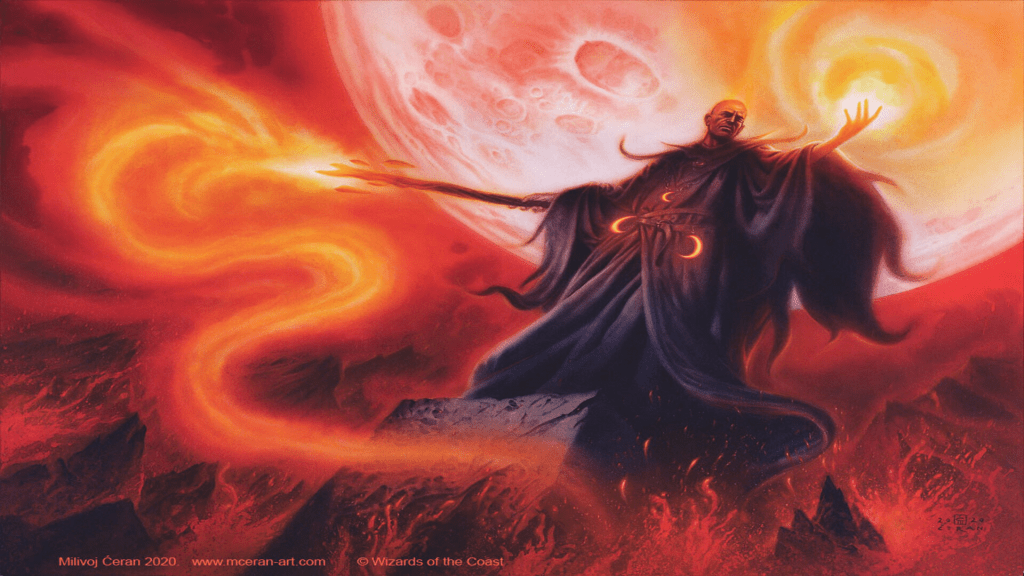
The average little handheld device will be the weakest against such a blast so we can start there.
Weak 2d4(5)EDC(electronic damage capacity).
Next would be larger ship-based systems. Hardwired interfaces etc.
Moderate 3d6(11)EDC
Then we have large ship-wide systems
Hardy 4d8(18)EDC
Then you can have a hardened system that is more resistant to magical EMP. There are two ways to do this.
You can either give the system a damage reduction(DR) or just increase its EDC. For that we make it:
Hardened increase the EDC die size and +1 die.
Examples: Weak Hardened 3d6(11) EDC
Moderate Hardened 4d8(18)EDC
Hardy Hardened 5d10(28)EDC
Back to the combat example. With 6d6(21) EMP damage coming from the wizard it will knock out the functionality of the airlock interface as a Moderate (11) or even if it was Hardened (18). So that airlock will need to be repaired by the engineer before it can work properly again.
This, of course, can be used to great effect onboard an enemy ship by frying a great many of their systems by intentionally hitting everything they can with magic.
So in short, The level of the spell x2 is the modifier for the EMP chance roll.
The level of the spell x5 +10 is the radius of the EMP effect.
The damage of the spell is how much damage the EMP does. (If the spell does not do any damage then make it the same as a one-target spell of the level used per the DMG*’s guide to spell making pg. 283)
Now to cover the halfcasters. For rangers, I had to sift through the spell list and limit it to the spells that could be made into reasonable limited-use skills. My best example here is the spell Cloud of Daggers. For me, this was a simple case of making it a munition dump-style barrage of fire on a target that has all the same effects as the spell but without the above concern of the magical EMP. This will take a bit of cooperation between the GM/DM and the player that wishes to play this class but it can create some unique situations and abilities for the game as well.
For a class like bard, I made the spells a sonic effect channeled through a device/instrument that made all the effects become sonic-type damage. This was limited when they were in the vacuum but not unusable. Again these would act as “Charges” or limited use skills but functionally would still use the spell slot mechanic to try and keep things simple.
I hope all of the above is helpful and can make your next game of “magic in space” fun and exciting for you and your table. Game On!
Inspirational book:
Morin, J.S., Salvage Trouble: Mission 1. Magical Scrivener Press, 2014.
Dungeon Master’s Guide (Dungeons & Dragons Core Rulebooks). (Wizards of the Coast, 2014), p. 283
About the Author
Jared “Martel” B has been GMing and playing in several TTRPG’s since late 2013. Enjoys the challenge of bringing his players worlds and stories straight from his mind in the moment that it happens. He is one of the Founders of RPGCounterpoint, happy husband to an active historian wife, and father to two puppers and new toddler!
 RPG Counterpoint
Leave a comment