
by: Jared Biti
(Part of a series on herbology uses)
In this article, I would like to go over how I handle using herbology, the crafting aspect, in the tabletop games I run. Most of the following should be able to be used in any game system but most of my examples will be based in D&D 5e. I will start with various uses of herbology and how it can be used to fill needs in a party. Next, I will show when it can be worked into the game time without taking away from the actual gameplay at the table.
Herbology, as used in the following, is the herbal side of existing crafting tools. The toolsets from D&D 5e that I can see being used for herbology are Alchemist’s, Brewer’s, and Poisoner’s Kit.
How do I use herbology in a moving, active party? In a party that is actively moving across terrain or through a dungeon, not stopping except for short and long rests (1-hour or 8-hour time periods), herbology can be used as a knowledge-type skill functioning as a way to identify plants that can be used for food, for poison, for medicine, etc. In 5e this would usually be under the Nature skill but if someone in the party has proficiency in the above-listed tools I could see that providing more technical knowledge in identifying what is found, and more accurately knowing where to look for the plants for the purpose desired.
For balance, I wouldn’t allow the poisons or medicines to be particularly powerful, but I can see using downtime during a long rest to make a basic 1d4 or 1d6 health potion or a single-use 1d4-1d6 poison to make a weapon more lethal. The potential outcome of longer uses of downtime will be discussed later.
An example of how I used this in a campaign: I had the players encounter enemies that inflicted a type of damage that had lasting effects, leaving the characters with unhealed wounds. They found an herbalist NPC in a nearby village, she listened to them and offered them some tea. She called it the “Tea of Remembrance.” It healed their wounds and gave them a nice little glimpse of a pleasant memory while tasting like their favorite beverage. All of that was fluff but it helped embed the idea of the item in the players’ memory for later use.
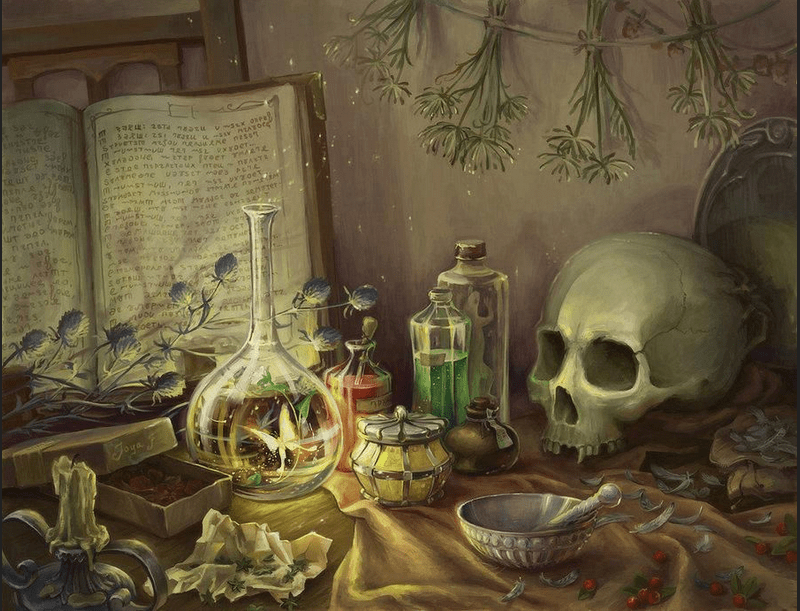
The NPC gifted them the formula for the “Tea” and they have used Brewer’s Tools to duplicate it multiple times. One of those times, with some nudging, they cooked it down to a paste to help resolve petrification. I gave them reasons to pay attention to what they could use with the herbs and recipes that came up in-game.
The ways that I see it being used in-game without taking away from in-game time is by giving the party ways to start the crafting process and walk away from it for a time. This does not work with all crafting projects within the herbology category, but it did work when I had workshop structures inside an adventurers’ guild estate. There, I had players use their brewing tool proficiency to start a 1-week brew of beer or whiskey. This allowed them to leave for jobs and come back when it was finished. Obviously, this works for brewing but not other things.
If you allow them to hire NPCs, then they can have the NPCs do a lot of the work but it may not be cost effective. More detailed and more involved crafting possibilities are shown in a source material that I use when I do crafting in my D&D games. It is from a blog “growupandgame.com” which has a section for D&D things. (https://growupandgame.com/dungeons-and-dragons/questionable-arcana/dnd-5e-alternative-crafting-system-item-crafting-rules/)
I hope to flesh out how you can use other crafting methods through your players or NPCs in future articles. Thank you for reading and come give us your opinion and questions in the discord server!
Roll on!
 RPG Counterpoint
Leave a comment