
By: Maryanne Cullinan (Culliope)
A version of this blog post will be appearing in Adventures in Teaching and Learning with TTRPGs this spring – Culliope
Ah, love. Sometimes it finds its way into your life, and other times it’s a knife in your back…literally. Sometimes players have one-track minds and see the world through rose-colored, or murder-filled glasses. The TTRPG community has coined the term “murder hobo” to describe someone who travels around the in-game world, never settling down or making connections with NPCs, while also wantonly looting, murdering, and generally causing destruction. Our little corner of the TTRPG world likes the term “flirter hobo” to describe characters who are similarly focused on one thing—flirting, taming everything as pets, and/or trying to seduce every animal or NPC they come across! But what can you do when Cupid’s arrows have struck, one way or the other?
No matter what sort of cute names we give it, when a player has a super one-track mind, it can be very frustrating for the rest of the party, if they feel hamstrung by the foibles of one participant—not to mention the GM, who has to suffer through their NPCs being murdered relentlessly—or flirted with just as relentlessly! But typically, players are not there to ruin the mood with their lust—blood or otherwise! So how do we handle it?
Players: Why U Do Dis?
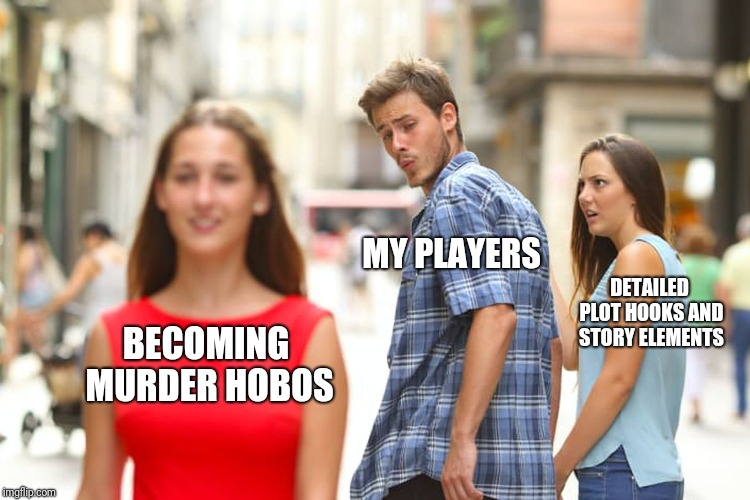
I noticed that one of the first things new players often do is try to break the world by being anti-social in a way they never could in real life. They do naughty things: they slap guards in the face, flirt with the mayor’s husband, or tell off the sheriff—it can be good fun to discover the boundaries of the new playspace, work through learning how to play a character and stick it to the man at the same time. This scenario can be seen in the McElroy Brothers’ podcast The Adventure Zone, season 1. Balance is established as a beloved story arc with amazing characters and wonderful storytelling—but if you listen back to the first few episodes, they are mostly telling off-color jokes, killing things, and causing problems. It’s only toward the end of the second mini-arc that they start to find their footing and really jump into the characters and story world. Generally, people are doing the best they can, and behave in a way that they find entertaining, even if everyone else does not! If professional podcasters take a while to find their footing we need to be a little bit patient with each other.
For the GM: Logical Consequences
However, I am a big fan of logical consequences in real life and in-game. But this time-honored parenting technique is not just for cat-herding squirrely teens! If someone is burning down the orphanage—have them sent to jail! If someone is creepily hitting on the bartenders—out you go into the street! Try to seduce the dragon? It’s time to feel the weight of a big old claw. Want 15 direwolf pups? How is that stealth check looking for you? If we want the story to matter, choices should have the weight of narrative consequences behind them. I often find that if one of my middle schoolers is being particularly egregious in their off-plot behavior, the rest of the party will tire of it, and begin to allow some of the narrative consequences to occur. The first time you save someone from an angry mob it might be funny, but the fifth time, you let them get captured!
For Everyone: Table Norms
If we assume that everyone has good intentions, and is there because they want to play together, open communication is important. Establishing some table norms can help initiate these conversations. Having some open discussion about what everyone wants is valuable. What are we hoping happens in the story? How do we encourage equity of voice? What do we do if we are uncomfortable or unhappy as players? How do we solve the problem if different players want to move the story in different directions? Talking through these things beforehand—and reestablishing them during play—helps all of us know how to navigate the social space together.
For the GM: Just Talk It Out
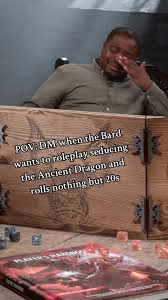
No one likes feeling called out in public, but it is also okay to take a player aside and explain the situation to them. No one comes to a TTRPG table hoping to have or cause a bad time. One of the first courses of action might be just to explain how other people are feeling. If you are worried about hurting someone’s feelings, the conversation can be framed about what the character is doing, not what the player is doing. “Hey, it’s frustrating the party that little Greggles is trying to seduce every living or undead woman we come across. Can you have him tone it down? It is making it hard for the other characters to get any info from them about what to do next,” versus “Hey butthead, stop ruining the story.”
“But It’s What My Character Would Do…”
Occasionally you will get someone who will say, “It’s what my character would do,” and that is when a GM can put their foot down (nicely). In that situation, a GM can say that that kind of character can’t work for the story that is being told, and will have to be shelved for a different game. This is the GM’s prerogative. It is a power to be wielded sparingly, but when needed, use it.
Or, if possible, work with the player to figure out how to have the character change to become more thoughtful. This work can also be done with the entire group. It’s not cheating, nor will it diminish the fun of the campaign if the players work together to help a character have an arc of development. Having an idea about what each player wants for their character can help the players support each other’s character development, which takes the pressure off the GM to do it all.
So, will these tips heal a broken heart, shield your NPCs from rogue attacks, or bring your party onto the path of righteousness? Maybe not, but a little naughty is fun, as long as everyone is enjoying it. Remember, it’s one thing for the characters to be having a tough time, but the idea is that the players are having fun. We’re all here because we love to play, and enjoy each other’s company. With that in mind, you’ll be able to settle the little lover’s spats between players before they become irreconcilable differences! Love conquers all!
About the Author
Maryanne Cullinan is a middle school teacher, PhD student and Academic RPG Researcher. She multi classes as cleric/bard/cat herder. You can check out some of her work on http://www.culliopescauldron.com or say hello @culliope on Discord and Twitter.
 RPG Counterpoint
Leave a comment