By: Joe Gaylord (Lazarus Game Lab)
I am a big fan of Terry Pratchett’s Discworld series, Lord of the Rings, Welcome to Nightvale, Monty Python, and so on. I am kind of a omninerd in that way. As such, every so often, a friend sends a link to an RPG based in a canon world that I happen to enjoy. And, I am sorry to say, I do not usually care for them. These games fall into a category that I think of as “canon heavy” and I am increasingly of the view that most RPGs are better off with light or no intrinsic built-in canon.
When I talk about a canon-heavy RPG, I mean a TTRPG with a well-defined world where the game is expected to take place, especially one with a canonical timeline that extends before and after the events of the game. For example, The One Ring has a heavy canon, since it exists in a famously meticulously detailed world. This is opposed to canon light games such as GURPS that provide only mechanics, without a fixed setting. For games with multiple settings, we can define individual settings in this way. In terms of Dungeons and Dragons, we can say Forgotten Realms is canon heavy with all of its lore and novels, whereas Mystara or Arcavios (Strixhaven) would be canon light, with the former being intentionally vague around the edges and the latter having only one location extensively explored. A rule of thumb I would propose is that novels per square mile is a decent proxy for the weight of canon, but it’s not perfect.
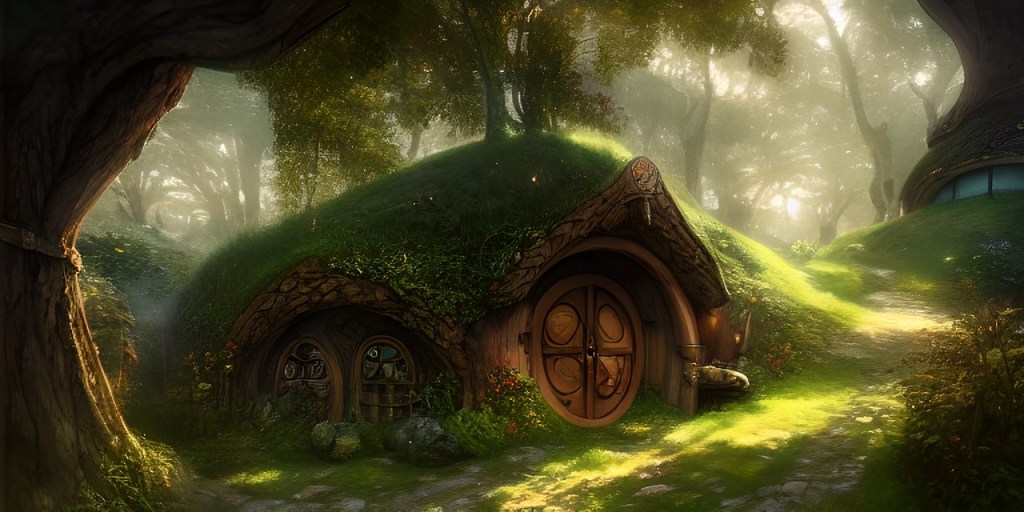
With that definition out of the way, my first big issue with canon-heavy RPGs is that your game should tell the coolest story in your world. An iconic piece of GM advice is to make the players the center of the world. What they are doing should be the most important storyline, and the events should feel weighty and significant. If the characters are playing in a world with Aragorn and Frodo running around in it, winning the War of the Ring and saving the world feels like a near-impossible challenge. Connected with the advice to have the players be the center of the world, there is the advice that player actions should matter, and that what they do changes the story and the world around them. If there are literal novels written detailing the events of the world after the game, this becomes difficult as well. You cannot maintain the canon while letting the players change anything substantial in the game. Both of these issues are often circumvented by having the players play as the iconic characters or participate in the iconic events from the canon. This keeps the players central, but constrains them to the characterization and outcomes from the canon, turning the game from an RPG to a kind of scripted theater with dice. As a final note, telling the coolest stories becomes an order of magnitude more complex if you are seeking to be as smart as Tolkien, as funny as Pratchett, or as witty as Welcome to Nightvale. Obviously, playing a canon game can still be fun, but it is hard to see it as not falling short on some level if your group is competing with those kinds of literary giants instead of just doing your own thing.
My other major issue with canon-heavy RPGs is the problem of “that didn’t happen!” Preparing adventures and campaigns is already challenging, you need to account for NPCs, encounters, environments, quests, and everything else. In theory, a canon-heavy game makes this easier, the NPCs, environments, and even some quests are pre-built for you. Except, it’s not actually easier. As a GM, it results in taking more time studying someone else’s world than you would spend creating your own. You are spending time studying years or decades of canon, which can often be convoluted or even contradictory. I run into this when basing a D&D campaign in the Forgotten Realms, there are so many intricate details that I feel my game teetering under the weight of other people’s lore. Then, after the preparation part, players who know the lore of the world you are playing in can, and sometimes cannot help but, metagame with their knowledge. They know that Saruman is not to be trusted while playing The One Ring, where part of the fun should be discovering that as a character. Even if they are not actively metagaming, they may know things about the world that you do not as the GM, leading to moments where you will have a player correcting the GM about some detail of world-building; the name of a king or god, for example. Although almost every one of these games includes a rule zero that you are free to change the world as you wish, that feels like it runs contrary to the nature of the game. The point is to play in the canon world and deviating from that is cheating the players of the experience. Moreover, those same players who might metagame could get angry or feel you are being unfair by changing things in that way. So the games are much harder to play and have a minefield of feel-bad moments, because of the canon that is supposed to make the game easier and more fun.

There are several alternatives that I prefer for RPGs that keep them canon-light. First, a game can simply present mechanics without a fixed setting. This is the classic idea of an RPG, that you might have some suggestions of setting, but in effect, the GM has the final say over the nature of the world. If you want something that has a bit more of a defined theme, homages work well. Rather than a specific Star Wars game, playing a “space opera” can provide the feeling players are looking for while short-circuiting discussions about how hyperdrives and lightsabers work, according to the canon. I know it is Star Wars, you know it is Star Wars, but we are not bound by the canonical rules of that universe. Finally, if you really want to play in a canon-heavy setting, the best alternative is to find some corner of the world or period of time without a fixed canon so that your game can make its own story. The starter set for The One Ring RPG did this very well, exploring events in the Shire between the Hobbit and The Fellowship of the Ring. Still, the characters include the parents of Samwise and Frodo, and therefore, the game cannot let them die at this point in the canon narrative. The worst case scenario, for the record, is something like the early Dragonlance modules, where the only practical way to play the game is to go through a pantomime of recreating the novels at your table.
In the end, these games are not for me, but if these games are for you, great. I am also a person with a reflexive dislike of fan fiction, and I feel like that speaks to the personality types who these games will appeal to or not. I cannot imagine enjoying a game based in someone else’s world more than one set in my own. I always feel pressure to “get it right” in a way that does not appeal to me. I would rather just enjoy the fandoms I enjoy, rather than trying to recreate them in an RPG. I guess what I am saying is, I want to stop seeing ads for the Monty Python RPG, thanks.
About the Author
Joseph Gaylord has been playing TTRPGs and TCGs for 25 years, with almost 50 titles to his name on DMsGuild as an author, co-author, or contributor. He is on most social media as LabLazarus.
 RPG Counterpoint
Leave a comment