By: Jared B
I have struggled recently with balancing combat encounters for my player parties. Specifically, the give and take of the various attributes and abilities that the NPCs have, and how that affects a given encounter.
The way my brain works, especially for creating and running in 5e, is that combat needs to be mechanically balanced for the fun of the table. Because, to me, if it is not balanced, then there is a chance that some characters at the table will outshine others. Catering too much to a specific class or build in the combat encounters can make a player feel like their character cannot do anything of note in that encounter because they cannot use their special “thing” against this particular enemy or in this particular environment. So in this article, I am going to show how I look over the attributes and abilities of my NPCs when trying to balance an encounter. I may use some examples mainly from D&D 5e, but I will try to make it applicable to different systems.
I am going to break this down into defense and offense “abilities” of the NPC, or “monsters” that the player characters (PCs) may encounter either in a planned campaign or a random encounter. Let’s start with Defense.
Using 2014 5e rules, some options for defense can be generalized as follows: AC (armor class), Health (HP), Resistances, Avoidances, and Retaliation.
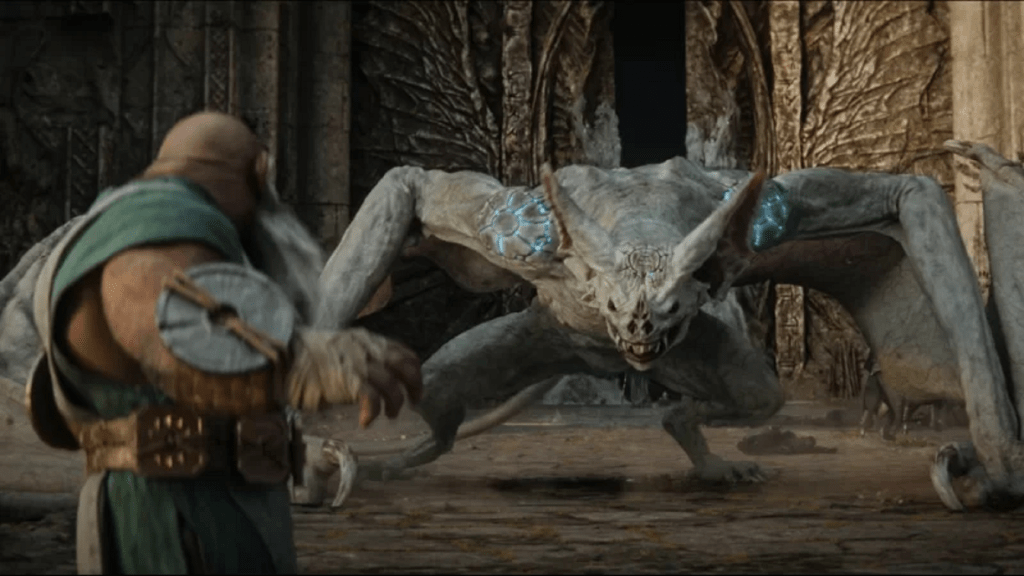
The basic starter for this is obviously the AC. The problem you run into for this is a PC’s ability to even hit the NPC, let alone inflict damage. This is typically more of a low-level issue for D&D, but it can be a problem at any level, depending on the system you are using and the party makeup. This can leave your PCs with low attack modifiers, useless, and can make the party feel like the NPC is unbeatable. Not the spirit I like to bring to a fight. What I shoot for is a challenging encounter, yes, but not unbeatable. Of course, too low an AC and the PCs will just cut through whatever HP the NPC has very quickly, possibly leaving a lackluster feeling about the encounter. To balance this, you have to take averages of the bonus-to-hit the party has and gauge how challenging you want the encounter to be.
As an example, if your PC1 has a +5 to hit, PC2 has a +6, PC3 has a +4, and PC4 has a +7. The average would be the sum of their attack modifiers (22) divided by the number of PCs (4), or 7.25, so we round to +7. The difficulty to hit would be sectioned out as:
Easy is hitting 60-90% of the time,
Midline, 40-60% and
Hard, less than 40%.
Use the +7 average of the party and add the probable rolls based on the percentage of the time you want the PCs to hit the NPC. This means your party is hitting an opponent with an AC 10, 90% of the time. This is because 90% of the time, when you roll a D20, you will roll a 3 or higher. Take the lowest value of that most-likely roll and add that to our +7, giving us the AC 10 for our NPC.
For an Easy/Midline encounter (60%), your party is hitting an NPC with AC 16, 60% of the time, because you are 60% likely to roll a 9 or higher on a D20. Add +7, we get our AC 16. For our 40% on the Midline scale, the NPC’s AC would be AC 20 (40% likely to roll 13 or higher).
Using this pattern, then a Hard would need to be AC greater than 20. Keep in mind here that hitting an AC 27 in this example would only happen 5% of the time (rolling a Nat20), or 1 in 20 attacks, and an AC 28 would be impossible for any in the party.
Now, will this still make it potentially easier for your PCs with high bonuses to hit and harder for those with lower bonuses? Yes. Unfortunately, there are limits to what you can do to balance it for the whole party. Hence, why I recommend using the average. If you try to make it good for either end of the spectrum in your PC group, it may ruin it for the other end of the spectrum at the party.
This leads into the next aspect of Defense: Health. The HP of your NPCs will determine, in part, how long they survive on the field. Too little and they are cut down quickly and serve little to no challenge. This can be ok. For minions or an unimportant encounter, this is actually what you want. It gives the PCs something to do that gives a vibe for the area and what other creatures they may encounter without draining their resources. But for Boss NPCs and for harder encounters where you want them to last, at least long enough to use their special abilities on the players and whatnot. For this, you have to play with it a little. But a rule of thumb is to take the combined damage output of the party and cut that by the average bonus to hit from the party, like we did earlier, and compare it to the AC of the Boss. So, if you want it to be the Midline to hit, 40-60% of the damage of the party will get through.
So let’s say our Party of 4 from the above example has the following average damages: PC1: (1D6+3) 7 damage, PC2: (1D8+3) 8 damage, PC3: (1D8+4) 9 damage, PC4: (2D6+3) 10 damage. Their total damage is 34. We want them to hit 40-60% of the time, so 40% of that is 13.6. 60% is 20.4. We want the boss to be a little hard to kill, so let’s give it the AC of 20, so only 40% of the damage gets through. Taking that, you multiply 13.6 (the 40% damage figure) by the number of rounds you want a solo version of this Boss to survive. Say you want it to last 5 rounds, so the Boss would need 13.6 multiplied by 5 rounds, or 68 HP. If you include minions in the fight, you will have to take them into account in the same way. Say 3 Minions of AC 16, getting hit 60% of the time, and is taking 20.4 average damage from the whole party. 20 HP for each minion would add 3 rounds to the fight, since damage from all members of the party would knock out one minion per round. In total, this Midline encounter would now last 8 rounds with a Boss NPC of AC 20 (HP 68) and 3 minions of AC 16 (HP 20).
This will at least give you a guide for where to start the HP of the Boss. Of course, in something like 5e, you will also have to take care and keep the CR (Challenge Rating) correct for the AC and HP you give to the NPCs.
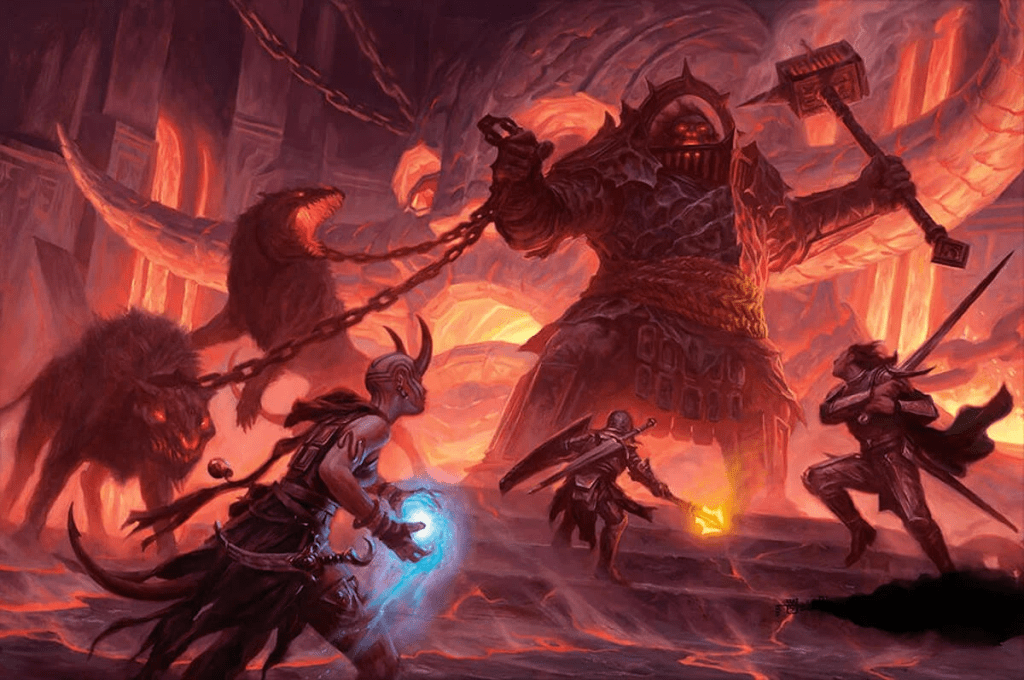
With that done, we move on to the Resistances. Now this still leans heavily into the HP mentioned earlier. This can be used to balance things in favor of one or more types of PCs you have in the party. Just be careful not to alienate some when you use Resistances. How I use this, for example, is if I have a caster that is doing a ridiculous amount of ranged damage to my NPCs, then I can give my Boss a Magical Resistance. This makes it harder for Magic attacks to work on them, or they do less damage. Using it this way gives the non-magical damage dealers more of a chance to do damage and have some time in the encounter. It can also be used the other way. If the non-magical damage-dealers are doing all the damage, give your Boss a Resistance to non-magical damage. Try not to be too specific with the type of damage; otherwise, it will look like you are trying to alienate certain PCs’ attacks. Whether you are or not, it will not help the feeling of balance. Generally, giving a blanket Resistance is the same as doubling the HP of the NPC against a certain type of damage. Count it this way when you use the previously mentioned method for deciding how much HP they have.
Avoidances. What I mean here is the ability of an NPC to go invisible/hide during combat, or being able to disengage and move about the field freely with little to no consequence from the PCs’ attacks beyond what the PCs can do normally on their attacks. The 5e Dungeon Master’s Guide(DMG) has some good guides on how this affects the Challenge Rating of NPCs. For other systems, you will have to fiddle with it a little, but it mainly affects whether you have a form of attack of opportunity or a consequence for trying to walk away from Melee. You can also apply anything that might benefit from striking from a hidden location. You have to account for fewer attacks on the NPC and possibly more or more effective attacks from the NPC. But to stay on the topic of Defense, Avoidances will extend how well the PCs will be able to chip away at the HP of the NPC.
Retaliation. Here, I am speaking of ways the NPC can cause immediate and direct damage to a PC that is attacking them, typically from a close range. This can be something flavored as “acidic blood,” “putrid stink,” etc. Basically, upon an attack from a PC, the PC suffers damage or even an immediate counterattack from the NPC that will likely result in damage. To balance the encounter, this delves into the Offensive side of the NPC’s abilities. (Stay tuned for Part 2).
Using the above, I hope I have given you a way to make your enemy NPC’s Defensive abilities to provide equal fun for all your players and their PCs. Thank you for reading, and look for the next article for Scales of Combat, where we will delve into the Offensive capabilities of NPCs and how you can balance them to, again, keep your players entertained and all the PCs in the spotlight in combat encounters. Game on!
About the Author
Jared “Martel” B has been GMing and playing in several TTRPG’s since late 2013. Enjoys the challenge of bringing his players worlds and stories straight from his mind in the moment that it happens. He is one of the Founders of RPGCounterpoint, happy husband to an active historian wife, and father to two puppers and a toddler!
 RPG Counterpoint
Leave a comment