Article by Aida Haak (@intrepidwriter03)
It was a dark and stormy night… and then what? If you’re reading this, you’re standing before a precipice. Running a game that embodies the menacing, grueling, heart-stopping feeling of true horror is no joke. How did you ever find yourself here? Whether you’re a hobby gamemaster or a paid creator, this is your guide to creating a game that your players remember in their nightmares.
- How do I pace my horror game?
- How do I add horror to my D&D game?
- How do I run a scary encounter in D&D?
- How do I create a spooky atmosphere in my game?
I’ve run dozens of horror games and a very successful horror Kickstarter. Not to spoil the surprise, but we’ll delve into this tome of horrors in this article, and I’ll be your guide. No need to consult the oujia board!
How to pace your horror game: Setting the tone
Tip. Tap. You look up from your phone to the gentle, coalescing drops of water landing on your windowsill, one at a time. There’s a quiet moment, drawing you away from the buzz of the city to watch the storm clouds. As they gallop across the horizon, a flash of lightning pierces your vision, followed by a rumble of thunder that you feel in your stomach. For a moment, you’re lulled by the beauty of it.
But alas, a fwoosh! You’re startled from your reverie by a blast of wind, scattering the lease papers from your desk. You rush to pick them up. Tip tap tip tip tip, the rain cries, growing in a sudden tumultuous barrage! It’s a scramble. You hardly get the papers back on your desk. The wind howls through the open window. The rain begins to form a puddle, wetting your socks, and slam! You shut the window and breathe a sigh of relief. You and your papers are finally safe. You sit back down and swipe to open this article on your phone. As you scan to find where you left off, you hear the scraping sound of a window slowly being opened from behind you…
Pacing can be an ordeal for even the most experienced gamemaster or DM. It’s a sort of dance with the devil… Start with a gentle tango and add the fancy footwork from there. Lucky for you, I’m no devil, and I’ll be your choreographer.
Horror versus suspense in tabletop games
Full disclaimer here: Dungeons & Dragons is a game filled with fun and hacky slashy. It’s hard to replicate the true feeling of heart-stopping jumpscares that might come with a system like Call of Cthulhu or even a video game like the now-viral REPO. Running a horror game for a system like 5e or Pathfinder tends to feel more like a pulse-pounding game of suspense… But we can actually use that to our advantage.
Before we go on, the more important thing you need to have before running a horror game is your players’ consent. Set aside some time for a “session zero” or before one of your regular sessions to talk about your idea for a horror game. Getting your whole party on board and excited to play a horror game is fundamental to truly getting under their skin. Having a discussion about what topics to avoid allows you to really dive into ones that you know your players will enjoy. If you make sure they’re comfortable and ready to go, it’ll be especially fun to get uncomfortable and uncover terrifying topics as a group.
A second important point of consideration to discuss is the length and style of the horror game that you want to run. Gathering your friends around a bonfire for a Halloween one-shot session is a great way to enjoy the spooky scaries, and so is a longer campaign like the infamous Curse of Strahd, but they’re very different to run.
Pacing is the most crucial part of setting up something that truly achieves a horrific feel. In a one-shot, you’ll have to consider pacing beats for each encounter. For a campaign, you’ll do the same, but you’ll also view it from the scope of your entire story. Some sessions might be loaded with horror, while others might give your party a beach day.
Using suspense and surprise effectively
In storytelling, a common tool for pacing is to think of it in beats. Like a good musical number, a story has a rhythm. Most often, this rhythm slowly builds to an eventual climactic event like the final boss battle. In horror stories, we break this rhythm. Jumpscares are an especially vivid example of this, but they need something called “leverage” in order to work.
Jumpscares, just like anything else scary, don’t come from nowhere. That might seem funny, but the best jumpscares require setup. We’ll talk about atmosphere later on, but let’s highlight that idea of pacing beats again. Ba-dum, tss! Jumpscares don’t work at the beginning of the session. Trust me. I’ve tried it. It feels cheap, and it is. You need to save up to make it effective. Your goal as the game master is to build that slow, thrumming tap drip before the pipes burst.
When you’re running a horror TTRPG game, keep those pacing beats in mind as you run the session. Think back to the last cheesy horror movie you saw. As the protagonist explores the house they just rented, you notice they left the door open. You saw the shadow moving outside the window. Your job is to plant those little clues and hints that leave the players wondering. The best killer isn’t the one that no one knows is there… It’s the one that leaves you thinking, “It’s right behind me, isn’t it?!”
Hot tip: Don’t be afraid to add some humour into your game! If your game is serious all the time, then that’s all your players will expect. Let the characters laugh at the bartender’s bad puns. It’ll be even scarier when the bartender’s eyes glaze over and they draw their blade with jerky, unnatural movements.
Basically, it boils down to this: Get your players into a rhythm first. Then, break it! It’s like a game of Jenga. As the players explore, each clue (like finding a trail of blood) should feel like you’re pulling another block from the pile. It’s even better if you can create a scenario where the players get to pull the blocks themselves! (A good example of this comes from A Quiet Place, where a monster attacks if you make any noise, but sometimes you can’t help but do something loud). The key to this is to build suspense with each beat and grab the popcorn as the Jenga pile all falls down!
How to add horror to your TTRPG game: Introducing the scaries
Great – you’ve learned to tango. Let’s get you a suit! Pacing is one of your strongest tools, but it’s ineffective if your encounters aren’t actually scary. Let’s break that down. Good horror or suspense encounters use three key elements: A known but obscure threat, a sense of urgency, and stakes. No, not the pointy wooden kind, you Stoker Stan!
How to run a scary encounter in your TTRPG
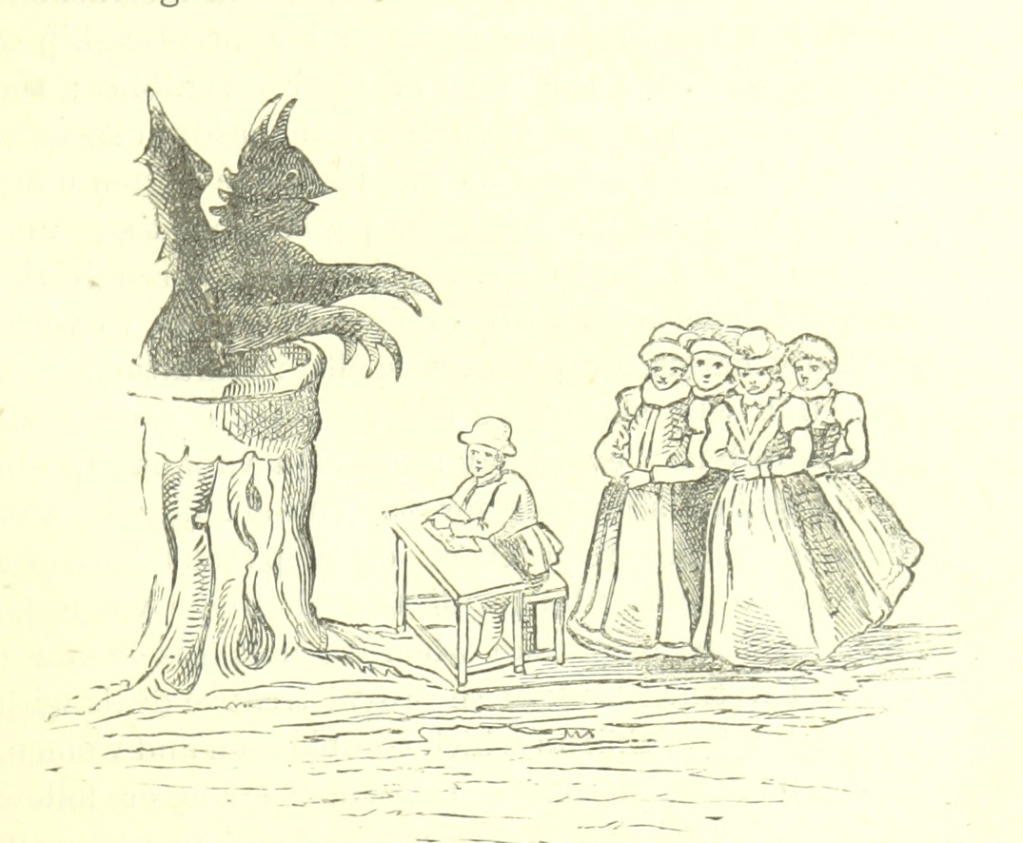
“An ugly demon-shaped statue on the corner watches you with distant, stony eyes. Roll perception! … Is that a seventeen? Alright. Its face is locked in an eternal scowl, but as you approach, you swear you see its shadow moving. You blink and the statue is gone, but a fast-flying silhouette now blocks the moon above you!”
Yeah, okay, you got me. It’s just a gargoyle. But here’s a tip to make your monsters more fearsome… Don’t tell them that! Instead, describe the creature and let them guess. You don’t have to be super wordy like I am to do that effectively. Try picking three traits about the monsters that are scary and focus on those. A simple scarecrow becomes a straw man (1) with bloodied scissors for hands (2) and a maggot-ridden smile (3).
P.S.: A monster in a horror game doesn’t just run up and slash until it dies. I mean, maybe that’s what you’re comfortable with, and that’s fine too. To take your battles to the next level, try to give each monster one memorable strategy. A gargoyle might fly up and then dive bomb players, forcing them to rely on opportunity attacks. On the other hand, a ghoul will probably attack one character until it is paralyzed and then drag it into a dark pit where it can feast.
How to introduce a sense of urgency
One of my favourite moments in a game is the ticking time bomb moment. My most popular horror game features a terrible, cursed mansion that permanently traps any creatures that remain within when the sun rises! Other examples could include learning that you must escape the dungeon before the vampire overlord arrives, or working with a willing character to afflict them with a curse that slowly draws them closer to death unless you kill the malevolent demon that afflicted them.
Just like the rest of your pacing, it’s important to include beats when introducing a sense of urgency. The birds start to chirp as the sunrise nears. The vampire’s precursory party arrives. The curse begins to blacken the character’s veins. An effective moment of urgency has to be made very clear to the players, and if it’s a one-shot or a single session, you can even tie it to a real-life timer.
Use stakes and meaningful loss in your game
Compelling hooks and thrilling dangers require a lot of buy-in from your players, which is where it helps to talk to them in advance. You might have them come up with a personal quest or connection for their character and tie it into the game. It’s also important to raise stakes that your players will actually care about. If your party is evil-aligned, they might not care as much about the village that is slowly dying because of the curse, but they’ll probably care about the Staff of the Magi that the evil warlock wields.
This also applies to creating encounters that feel impactful or even dangerous. A popular way to do this is by having enemies like the infamous Strahd, who are incredibly powerful and dangerous. You can raise the stakes with small losses, like a bridge that crumbles before everyone can cross, the loss of a friendly NPC, or a door that they fail to unlock. If you’re a particularly passionate gorehound, you might even allow your characters to find themselves in an encounter where a character dies, but not everything has to be big to feel dramatic!
How to create a spooky atmosphere for your game
Even if you’re not running a horror game for Halloween, you can bring out your typical evils. Background music (with no vocals) can get the vibe going for in-person and virtual groups alike. If you’re not sure what to use or don’t want to make a playlist, some tabletop creators like Michael Ghelfi create ambient tracks specifically for this. If you have some cash to spare, you can support a small creator and purchase hand-drawn battlemaps and tokens that elevate the playing field, but there are plenty of free ones, too.
Running a pre-made horror adventure can help you focus on running the game, and you can spice up your game room as well. If you’re playing in-person, light up some candles and grab some Halloween decorations! Even if you’re playing virtually, you might ask all of your players to dress in costumes for the occasion and play with their cameras on. Plus, there are some thematic ways to facilitate the gameplay, so let’s cover those and then get you playing!
Leverage fear of the unknown in your game
I’ve covered this point a few times already because it’s so important, but let’s call it out from the deep. Oh, ancient one, I summon you with your terrible true name: The unknown!
This can be a tricky topic, because an instinct of many game masters is to keep something secret for a big, final surprise. It’s especially tempting in a horror game, but resist! Wrench yourself from the grasp of that vile demon, for you’ll find more merit in slipping your players little clues and watching their faces light up in horror as they realize the truth. Take a look at what we talked about in the pacing section: You gotta drop a beat to form a drumroll.
Sometimes, though, it’s important to know when to withhold information. To clarify: Cognitively, humans are naturally inclined to fear what we don’t know. It’s simple, evolutionary nature. However, they have to know that there is something they don’t know in the first place. Give your players enough clues and signs for them to know something is wrong, but leave an empty space where their imaginations can fill the void.
Summary
In your journey of hosting games, you might find that some of them don’t land the way that you planned. This happens to a lot of game masters, especially in the horror genre. After all, you’re venturing into dark woods. If I’ve done my job correctly, this article will serve as your spooky flashlight. Treat these next tips like they’re your spare batteries.
- Talk to your players. Knowing their desires and having their buy-in is crucial!
- Use humour and fun moments to make the horror encounters that much darker.
- Tap into your players’ anxieties… roll dice randomly for dramatic effect!
- Give your players information to work with. Even Dracula has a weakness!
- See if you can connect the stakes directly to the characters…
And last but not least… Be kind to yourself! Running horror games can be hard. Ultimately, if people are having fun, you’re still winning. I’ve given you some of my best monster-hunting tools. Now go out there and find that which dwells in the dark! I’ll be watching… 👻
About the Author
Aida Haak (@intrepidwriter03) is a queer writer and designer from Ontario, Canada. Her adventure as a tabletop RPG writer began with The Mourning Mansion, a horror one-shot adventure for 5th edition that raised thousands of dollars on Kickstarter. Check out her quest to make a more creative, playful, and diverse TTRPG industry at https://bsky.app/profile/intrepidwriter03.bsky.social 💛
 RPG Counterpoint
Leave a comment