By: Green
One of the draws of playing RPGs of both the TableTop and the video game variety is the opportunity to experience, at least partially, what it would be like to be someone different than ourselves. Most of this occurs in the pure power fantasy sense: becoming a fighter to stand against hordes, a deadeye-gunslinger-cowboy of the post-apocalypse, or a wizard to bend the very fabric of reality to her whims. On a smaller scale, it can even look like playing a person with a different personality. Oftentimes, this can result in playing a character who can do things beyond your abilities. This is usually fine; the dice can lift the impossible weight for you, but what about when you’re playing a character who’s one of the smartest in their realm? The reverse is a different sort of interesting conundrum, playing a character that is less intelligent than you. A specific example: what if a chemical engineer, who is playing an archetypal barbarian, comes across a puzzle based on the periodic table of elements? It beggars belief that the barbarian would have that knowledge, but what is the player supposed to do about it? Conversely, what if someone without training in the elements is playing a character with said training who comes across the same puzzle? Below, I will try to provide some advice about grappling with these conundrums.
The first half of this paradigm is when a player knows more than their character. This solution is simple, and has been so well discussed and for so long that Gary Gygax himself spoke on the subject: Metagaming. Simply put: don’t have your characters operate as if they have knowledge they shouldn’t have. To be fair, this goes for the people on both sides of the GM screen. Players shouldn’t do it because it makes it even harder for GMs to create reasonable and interesting challenges, and GMs shouldn’t do it because…well, because it’s not fair.
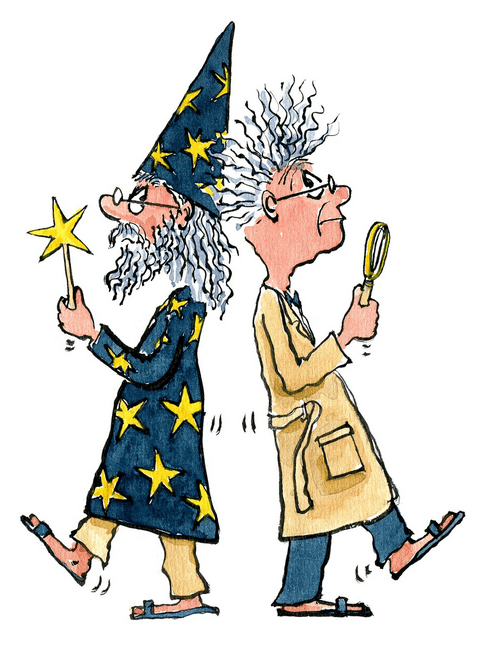
The second half of this paradigm is a far more interesting discussion, when the character knows more than the player. I don’t only mean this in the sense of a character knowing an obscure fact about alchemy but the ethereal being who controls them doesn’t, but I also mean it in the, “I am an imaginary character who could, theoretically, see the blood stain on the wall that tells me someone died horrifically here but, until the GM tells the player that controls me I might as well be blind to it” sense. To put it another way; how do you deal with the fact that the characters are, theoretically, going to know more about the world than their players because they’ve been there longer, are down-and-out smarter, and/or because they are “physically” present in the moment and the players are relying on a fallible human being to communicate what’s there.
To these conundrums, I offer a few solutions. The first is for the GM to prompt skill checks and give information without asking. Don’t rely on your players having read about Vault-Tec in the player’s guide to know what to do next; either tell them what their characters already know, or let them roll to determine what said characters know. The second is to be aware of when the party is struggling with a problem. What I do to avoid these situations is to create a list of things I want my players to understand or know regarding a problem or situation, and then write a connected list of what the party can do to learn that information. The previous bit of advice is going to sound like my “Writing a Mystery” article, and it should, because these concepts address the same issues. Another solution, and perhaps one that is less reliant on the GM, is to allow the pooled intelligence of the players to represent the in-game intelligence of the smart character. Perhaps the new person playing the hacker doesn’t know that much about SIN cards, but the street samurai’s veteran player does. As a GM, I would allow for the combined knowledge of the players to be expressed through their smarter characters. This can also be true in problem-solving situations. Perhaps the investigator’s player has exhausted their pool of questions for the suspect, but the druid’s player hasn’t, but they feel they can’t ask in character. I would encourage those players to communicate and allow their combined out-of-game knowledge to better express the expertise of the investigator in question.
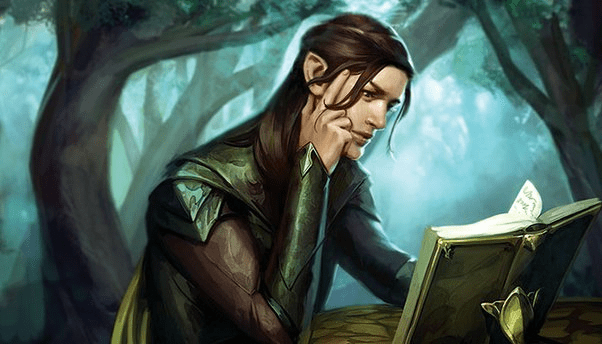
A final note for comparison, the ability scores themselves can be a good benchmark for these sorts of things. For 5e, and for any system with a natural max skill, it’s helpful to understand what that can look like in the real world. Specific writings about how different scores correlate to the real world are intentionally vague (for game design reasons), but I would suggest looking at scores like a bell curve; the vast majority of people are in the middle, and you quickly run out of cohorts the further you go away from the center.
About the Author
I’ve been playing TTRPGs of one form or another since 2017. I’ve only recently branched out into game systems other than D&D 5e in 2022. I’ve experienced Fallout 2d20, Animon, Konosuba, Shadowrun 5e, Pathfinder 2e, and the Transformers TTRPG. I’ve had the privilege to do quite a lot of GMing for 5e, including the creation of three homebrew campaigns, but not so much for the other systems. I have less but a growing amount of experience GMing for Pathfinder 2e. Interestingly, I’ve GMed more games of Fallout 2d20 than I’ve played in.
 RPG Counterpoint
Leave a comment