From Jared Biti
Ah, October. The time of year when everything can go bump in the night.
So, in this article I am going to talk about the two times, thus far, that I have actually made players nervous for their characters. The first was unintentional, the second was on purpose. Then I will attempt to analyze what I did that made them nervous so that when a GM/DM wishes to pull this off, they have some methods of doing so.
The first was a one shot I ran at a small DnD convention. The specifics of the oneshot are not really important, but it was a level 5 party of 5 PC’s and 1 NPC. All were prefabbed and set in a wild west type of setting. They broke out of jail the night before their execution and had to battle through guards to get their gear and then through a chase on mounts across the plains. It was during this chase scene and in the final battle in a box canyon that I could tell they were nervous. They kept making comments about, “Why haven’t they gone down yet?” and “Are we going to make it?” etc.
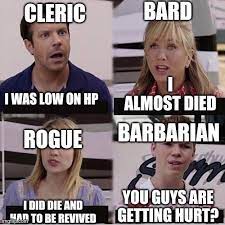
In reality only one of them went down to 0hp, in 5e Dnd none-the-less, and it was about 1 or 2 rounds before the final encounter was over. So, they were in no real danger, but they sure thought they were.
They were hitting the enemy, reasonably often, doing anywhere from 1d6 to 1d10 damage plus modifiers, and the enemy was only doling out about 1d8 and in the final encounter up to 1d10. At 5th level this was not really dangerous. The factor I noticed was that these enemies simply had a lot of health. It seemed being meat bags made it really concerning to the players. It may have been that I was not doing a good job of telling them what condition the characters were in health-wise during the fight, but it unnerved them when it took a good 10 attacks to drop them. So factor one: Maybe having an enemy as an easy-to-hit meatbag works? Maybe it is something that will make your player-characters second guess their situation?
The second situation was during a homebrew game I run regularly. I intended to put them on edge in this case. I used a quick monster stat block, and reflavored a few things. I wanted a creature that seemed unstoppable, with a clear focus and target in mind. One of the player characters was its target. In this case I had it use one of the character’s names that the rest of the party didn’t know. That made the character nervous in itself, but when its target was clearly one of their own, the party moved to intercept it.
Theatrically I didn’t give them any inclination how damaged it was, as it was not supposed to show damage, it was supposed to be indomitable in appearance, up until the point it fell. I also gave it, mechanically, resistance to a lot of types of damage, and a significant amount of damage and health. So when it started plowing forward, only stopping to attack those that tried to stand between it and its quarry, it made them realize how dangerous it appeared. I dropped the cleric that got in the way, and nearly dropped the warlock and a blood hunter that tried to intervene. In this case I believe it was the inability for the players to know how damaged it was that made them worried–Also its significant damage output.
So to overlap the two instances,it seems that having enough health in a monster to make the characters feel uncertain about their ability to defeat, mixed with a way to make it where they do not have a way to know how damaged it really is,sets the mood for a nerve racking encounter. I hope this helps GM’s with their spooky encounters to ramp up the scare in their player characters. Thank you for your time RPGer’s! Game on!
Jared “Martel” B has been GMing and playing in several TTRPG’s since late 2013. Enjoys the challenge of bringing his players worlds and stories straight from his mind in the moment that it happens. He is one of the Founders of RPGCounterpoint, happy husband to an active historian wife, and father to two puppers and newborn!
 RPG Counterpoint
Leave a comment