From: John Henry (Hammered Out Homebrew)
Depending on your TTRPG of choice, the amount of options and possibilities covered can range from rules on the tiniest, minute detail to general rules that are applied to almost half of allsituations. This makes the decision of when to create your own rules and additions a subject that is very dependent on the system of choice.The right thing to homebrew can also depend on the table at which you’re playing. After those two things have been considered, the next thing to consider is how it fits into the system. .

Art: Dubiousartiste for Discovery of the Hollowed Isle
First off, the type of system must be considered and whether what you want out of the game already exists. For instance, if you have a player in Dungeons and Dragons that wants to play a character with a somewhat sentient shadow like Peter Pan, you might be tempted to create a new subclass or other method for the character to accomplish that, but the way to make that character might already exist in the system. Sometimes to do that, all you need to do is reflavor an already existing mechanic. Simply having the player use the echo knight subclass with narrative focus on the echo being the player’s shadow solves the majority of this problem. This is also true for if you want a monster to fight the characters. You might find that the specific thing you want doesn’t exist but all you have to do is reflavor an existing monster to get what you want. It might take changing one thing. For example, in official books a reflection monster was created simply by using the rules for a shadow monster but changing it to be fey with a vulnerability to bludgeoning damage instead of radiant.
What those specific examples cover is for a concept, but it illustrateshow simply having a little narrative leeway allows for the game to fulfill you and your players’ desire without having to create anything for the player. You’ll find that this solves most problems. This is especially true for more “rules light” systems like Monster of the Week and SAGAS. Sometimes simply renaming an ability is all that it takes.
Now making homebrew rules for certain scenarios or supplementary pursuits is a more complex subject. Dungeons and Dragons Fifth Edition is notoriously light in the crafting department. Before you jump at the idea of creating a system for that, it would be best to examine the wants of your table. There is no point in going to all that effort if the vast majority of your table has no real interest in a system like that. There is also the added caveat of other resources for a system like that. Third party publishers may have already fulfilled your need. You would simply need to look for the one that meets your desires. Kibblestasty, Giffyglyph, Mythmaker and Hammered Out Homebrew (cough) may already have something that meets your needs without expending all that effort.
That is a more general idea for the more complicated systems out there. For a “rules light” system, making your own rules is either very easy or just not needed. The SAGAS system has examples and suggestions on how to make your own rules. Monster of the Week has decently generic ideas that can be applied to a number of different scenarios. Most of the time, all it takes is the players and the Keeper (game master) agreeing on which type of roll is necessary. If it was crafting for example, I would say either a roll of Sharp or Tough would be appropriate.
All that being said, there is one more thing to consider before making new rules for a system: whether it truly fits into the system. Monster of the Week is a good system but trying to use it for some scenarios and setting will not quite work since it was designed to emulate Monster of the Week type shows set in a modern setting. So, if you want to set up scenarios that go outside of that you may want to consider using other systems before you strongarm the system into doing what you want. Monster of the Week is a particularly good example of this since it is built off of Powered by the Apocalypse. Many games have been released that are based off of this system and may scratch the itch your table has.
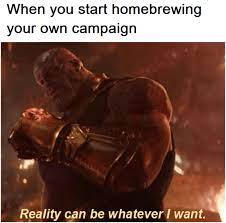
Now if you have determined that the available options do not cover what you need, even with reflavoring, your table is interested in such a mechanic and you wish to stay with this system (so you do not have to learn another, your homebrew is rather simple or the systems out there still do not scratch the itch you are pursuing), you need to figure out how to approach creating your own rules. The complexity of this subject ranges a bit, depending on what and for which system you are creating. The core of any approach to this is MATH. That may just be enough to scare most away from creating their own rules but you truly need to understand the math of the system you are creating. A concept made for Dungeons and Dragons Fifth Edition and for Pathfinder Second Edition are wildly different in terms of their numbers (and other things but let’s leave that out for right now). Just for starters, +1 magical weapons cap out at +3 in DnD while they cap out at +5 in Pathfinder. This small difference alone shows that there is a contrast in how their numbers work. Understanding how your system works is the core of any good supplemental rule or mechanic.
For instance, at the time of writing this article I have been learning how to play the SAGAS system. It is wildly different from most other systems I have played. So I will be doing my best to understand the system before I embark on a quest to create my own rules and supplements for it. But once you have a clear understanding of the system and its balance, and you have a clear understanding of the system you wish to create, we can manipulate it to do just what we want. A good place to start is looking at rules within the system that are close to what you want. Creating a new player handbook for Monster of the Week for example would not be too difficult given that there are already nine handbooks, all with a common base. So all that needs to be done is establish the same base that all of them have, find what common options the new handbook would have with some others, and then create your own entries that have a similar level of narrative power that others have. Given the elegant simplicity of that system, this should not be too difficult once you understand the bounds of power the other abilities have.
If you are just starting to create new rules and mechanics, I would suggest starting on the simpler aspects of the system with which you are working. For DnD, Pathfinder and SAGAS, this could be creating a new item. For Monster of the Week, this could be just a new move instead of a new handbook. If you are certain of your grasp of the system, you can start to branch out. To use DnD as a touchstone for this, you could go from items to spells to feats to monsters to heritages to subclasses to full-on mechanics or classes. The only part not covered there is the small little homebrew rules that might make your games flow easier. The most common one is having a health potion be a bonus action to drink instead of a standard action. This has been tried many times and you can find countless evidence on the internet as to why people like this change. With that much backing it up, you can be reasonably certain that it will not throw off the balance of the game.
For DnD Fifth Edition it is understanding that bound system that is tied to d20 roles. For this reason and the manner in which a game is played, homebrew rules for monsters are much more loose. You can fundamentally change monsters a lot without throwing off the balance of the game. You just have to keep the player’s enjoyment in mind. For crafting and other large mechanics, it is best to build off the base the game offers. I am not talking about the small crafting rules given, but rather the bones of the system. Using the rarity categories and ability checks established in the game as a base for a crafting system makes sense and grounds it in the system you are using as opposed to making it feel disconnected.
Monster of the Week is a bit more loose with most everything. The most common thing that will have to be made for the game is the monster. Players might want an item that’s not strictly in the rules but I would encourage players to simply reskin an existing item since Monster of the Week uses traits and categories to describe the majority of their items. The monsters are very loose and lend more to a narrative play rather than a numbers crunching one, since the majority of the point of the game is spent trying to figure out the weakness of said monster. Just keep in mind how difficult the monster is. A groveling gremlin might be killed by 1 or 2 harm, but a werewolf will take much more – until you introduce silver that is. Then it can go down either when enough harm is dealt or when it feels narratively right. It is very important to establish a minimum harm though in those scenarios.
For Pathfinder it takes understanding of the complicated system that it is. It has some of the same bones that DnD has but has put a lot more on those bones. For this reason, I implore you to do good research to make sure that what you want to accomplish either as a player or a game master is not already lurking in the pages of those rulebooks. The numbers are not bound as heavily here as they are in DnD Fifth Editions but the level should still be considered.
SAGAS is a new game so it has a lot of room for expansion. Understanding the relationship between traits, struggles, and powers that determines which die to use is imperative here. The system lends itself to homebrew, both on a player and game master basis. So if you cannot find an already existing rule or monster there for you, it should be fairly easy to create your own following the examples set. The main emphasis here is how the rules lend themselves to roleplay and that should be the first consideration when making rules.
With these basic ideas in mind, you should be able to determine if homebrew is actually needed for your games. Remember, the rules set forth in the handbooks for TTRPGs are more like guidelines but they are still there for a reason. Happy brewing.
About the Author
John’s TTRPG experience: He has played D&D off and on for 14ish years. Starting in 2019, he has consistently run campaigns and one shots. Starting soon after that John started publishing his homebrew to the internet. He has written enough homebrew that he has plans for a book of it to be released sometime in 2023(DrivethruRPG). He has also played Monster of the Week, many RP board games, Call of Cthulu, and Pathfinder. You can see other of his work on Instagram!

 RPG Counterpoint
Leave a reply to RPG Counterpoint Blog’s 1st Anniversary! – RPGCounterPoint Cancel reply